Laia Casanovas and Oriol Maymó, alumni, nominated for the Oscars

Interview by Philipp Engel
Oriol Maymó, ESCAC alumnus: the adventures of an all-round producer
From Buried to [Rec], from Pubertad to Sirât, Oriol Maymó’s career is that of a producer who sees cinema as a collective, creative and profoundly human adventure. A former ESCAC student, Maymó is now one of the most prominent producers in the Catalan audiovisual scene and a clear example of the talent that emerges from the school and reaches the world.
Since 2006, he has headed his own production company, Corte y Confección de Películas, although he has accumulated more than 25 years of experience working on major projects in both film and series. Over the course of his career, he has worked with filmmakers such as Paco Plaza, Leticia Dolera and Oliver Laxe, and has shown a singular ability to move between different production formats without ever losing sight of the creative essence of each project.

From screenwriting to production (without losing heart)
Although he enrolled at ESCAC to study screenwriting, he soon became interested in production. In those early years at the school—when there were barely a couple of graduating classes—he was able to combine both specialities thanks to flexible training and a community that today brings together key names in Spanish cinema. Classmates such as Mar Coll, Edu Grau and Sergi Pérez would go on to become regular collaborators throughout his professional career.
For Maymó, production is about more than numbers and logistics. “I like to approach production from the gut, from the heart,” he says. For him, understanding the essence of a film, supporting the director in making decisions and accepting that making films involves making sacrifices are all fundamental parts of the creative process.
Sirât, an extreme adventure
That creative commitment is especially evident in Sirât, Oliver Laxe’s ambitious film, which has travelled to international festivals and once again brought Spanish cinema into the international spotlight. Maymó took on a dual role on the project as producer and production manager, becoming directly involved in a shoot of enormous technical and logistical complexity.
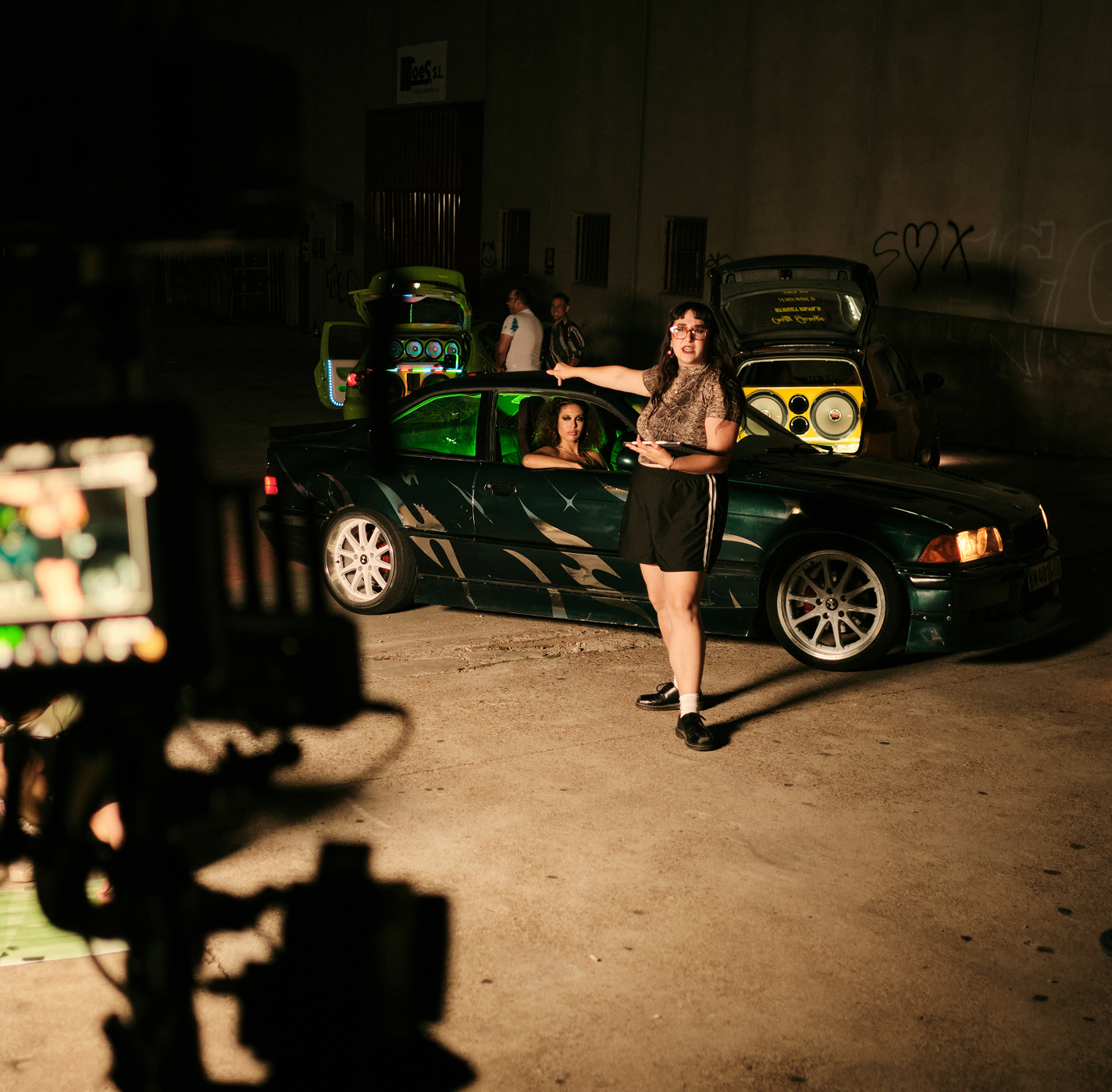
From recreating a real rave with authentic collectives to filming on location in Spain and Morocco, Sirât required constant decisions to balance realism, safety and feasibility. The result is an intense, visceral and daring film that shows how production can also be a space for creation.
The ESCAC community, on and off set
One of the values Maymó champions most strongly is working as a community, a trait directly connected to his time at ESCAC. In Sirât, that community is especially visible through the involvement of several ESCAC alumni in key roles on the technical team.
Among them are Lluís Rivera, in charge of special effects; Quim Vives, stills photographer; and Laia Ateca, art director. Their careers strengthen the presence of ESCAC talent in high-calibre productions and reinforce the idea of a professional network that is built at the school and endures over time.
Laia Casanovas, ESCAC alumna: the wall of sound in Sirât
Sound takes centre stage in Sirât, Oliver Laxe’s film, which has travelled to the leading international festivals and once again put Spanish cinema on the map. Behind its sound design, as physical as it is emotional, is Laia Casanovas, an ESCAC alumna and one of the leading professionals in contemporary film sound.
Winner of the EFA Award for Best Sound and nominated for the Goya Awards, Casanovas’s work on Sirât goes far beyond narrative accompaniment: the sound builds the film’s journey, tension and sensory experience.

From the classroom to international cinema
After studying at ESCAC, Laia Casanovas founded the Lima Limón studio with Oriol Donat, also a former student of the school. The studio specialises in sound design and post-production. Since then, she has worked on major projects, collaborating with filmmakers such as Pedro Almodóvar (Parallel Mothers), the Javis and Marta Díaz de Lope Díaz, with whom she has a close professional relationship.
Her career has led her to work on increasingly ambitious productions, consolidating an approach that combines technical rigour, artistic sensitivity and attentive listening to the story.
Sound as a sensory experience
In Sirât, the sound design starts from a clear premise: to create a physical and emotional experience. The film has very little dialogue, making sound an essential storytelling tool. From the initial impact of the raves to the desert’s profound silence, the soundscape evolves alongside the characters’ outer and inner journeys.
Huge speakers, truck engines, wind, vibrations and silences come together to create a true sensory roller coaster. Nothing is accidental: every sound texture is designed to evoke emotions almost subliminally, guiding the viewer through a story that moves between the documentary, the introspective and the philosophical.
Teamwork and the ESCAC DNA
The project Sirât is also an example of the strong bond between professionals trained at ESCAC. A large part of the film’s sound post-production team is made up of former students of the school, reflecting a professional network built in the classroom and kept alive over time.
For Casanovas, that community is key: trust, a shared language and a shared understanding of cinema facilitate complex and demanding creative processes such as Sirât. Laia also maintains an ongoing relationship with the school, returning to lead workshops and share her experience with new generations.
A recognition that marks a milestone
The international recognition of Sirât has marked a turning point in Laia Casanovas’s career. Following the EFA Award and the Goya nominations, her name is becoming established as a leading figure in European film sound, demonstrating that talent trained at ESCAC has a global reach.
Her career has been built on sensitivity, technical skill and many hours of listening, and confirms that in cinema, almost everything we hear has been created to make us feel.
Congratulations, and best of luck!