Qualification
University Master’s Degree in Film and Visual Cultures Studies
University Master’s Degree in Film Studies and Visual Cultures
(qualification being phased out)
This Official Master’s degree explores research and reflection on cinema, contemporary audiovisual culture and the evolution of moving images.
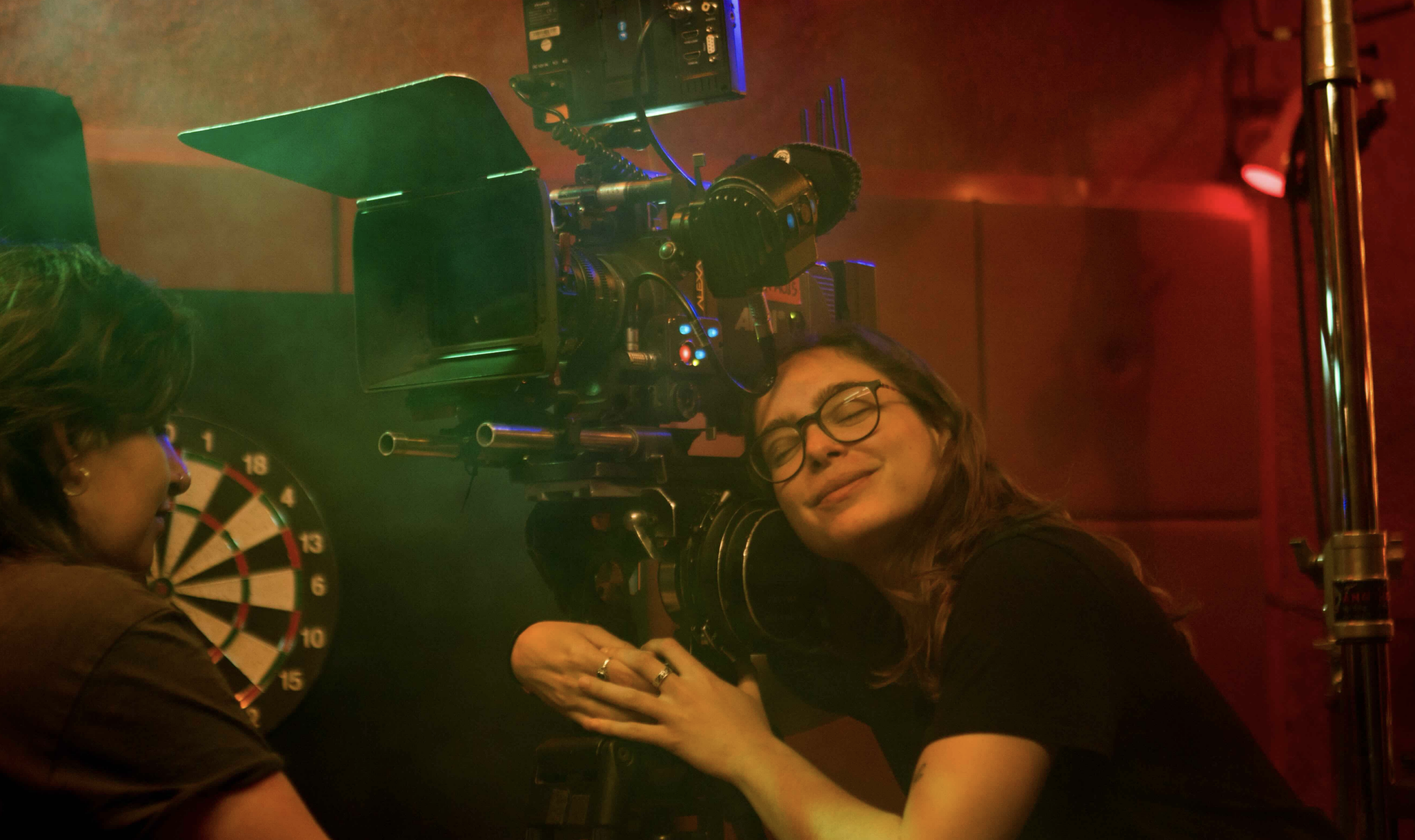
Its scope will include both cinema—in its many forms (fiction, documentary, experimental, auteur cinema, popular cinema…), from different perspectives (historical, aesthetic and industrial, as well as cultural studies, gender studies and reception studies) and with attention to innovations in the field (virtual reality, augmented reality, 360 cinema, XR cinema, etc.)—and the changing “multiscreen” universe in which contemporary society is immersed: television series, video games, interactive content or content created specifically for the internet, expanded cinema, video art, etc.
Its cross-disciplinary approach, with particular emphasis on the intersection of audiovisual media and cultural studies, is one of the main new features it brings to the range of training programmes in Catalonia.
This master’s degree is aimed at people interested in studying cinema and audiovisual cultures from a critical, historical and theoretical perspective, and curious to understand the evolution of cinematic language, its forms of representation and its relationship with cultural and social contexts. It is intended for candidates with a sensitivity to images and audiovisual narratives, an interest in the history and theory of cinema, and the motivation to analyse films and audiovisual phenomena from an interdisciplinary perspective.
The aim of the Official Master’s Degree in Film Studies and Visual Cultures is to provide more focused yet also more cross-disciplinary training for the many graduates in Cinematography, Audiovisual Communication or similar degree programmes (from Fine Arts to Humanities) who wish to become researchers, teachers, critics of cinema and other audiovisual creative formats, as well as festival programmers or content creators for cultural and exhibition institutions.
Programme name: University Master’s Degree in Film and Visual Cultures Studies
Degree awarded upon completion of the Master’s programme: University Master’s Degree in Film and Visual Cultures Studies from the University of Barcelona
Minimum duration of the programme and ECTS credits: Two academic years and 120 ECTS credits.
The Master’s Thesis consists of completing an original documentary creation or academic research project. Students will develop the project independently under the supervision of a lecturer, drawing on the theoretical, practical and methodological knowledge acquired during the Master’s programme.
The MFP marks the culmination of the learning process and reflects the student’s creative, critical and professional maturity.
A written project on one of the programme subjects, applying appropriate research methods to develop a personal argument based on specific readings and viewings.
For FMPs that are audiovisual projects, the school has computer rooms, spaces and equipment available for their production.
Teaching is in person, and students study on a full-time basis.
Classes take place Monday to Thursday from 16:00 to 20:30.
There are 25 students.
Teaching takes place in lecture rooms equipped with audiovisual projection systems.
For TFMs that are audiovisual projects, the school has computer rooms, spaces and equipment available for their production.
Classes are generally theoretical, and teaching methods include lectures, presentations, guided debate, group work and seminars. The relevant details for each subject are set out in the course plans.
As set out in the UB Regulations governing course plans and the assessment and grading of learning (Governing Council, 8 May 2012), assessment is generally continuous and takes place during the teaching period established for the subject, in accordance with the sequence of the study plan and the framework calendar approved by the centre. Continuous assessment incorporates the various forms of evidence specified in the course plan. These are collected progressively and in an integrated manner throughout the teaching and learning process, providing students and teaching staff with meaningful, periodic indicators of progress in acquiring the knowledge, skills and values covered by the subject.
Single assessment is a student’s right; exercising it means waiving continuous assessment. To opt for single assessment, students must apply within the established deadlines and in accordance with the procedures set by the centre. Single assessment must be capable of ensuring that the objectives established for the subject are met.
After grades are published, centres open a reassessment period to evaluate the extent to which the subject’s learning outcomes—competences and educational objectives—have been achieved. Reassessment is adapted to the characteristics of the planned competences and learning activities.
The relevant details for each subject are set out in the course plans.
University Master’s Degree in Film and Visual Cultures Studies
Christian Checa and Manu Yáñez
14/09/2026
31/05/2027 (First call)
01/10/2027 (Second call)
120 ECTS, two academic years
25
Eric Gurrera
16/04/2027
Spanish
Mon–Fri, 15h to 19h
The University Master’s Degree in Film Studies and Audiovisual Cultures falls within the fields of Arts and Humanities, and Social and Legal Sciences.
Applicants whose previous qualification is not directly related to the programme content must complete a technical bridging phase. This consists of earning 3 ECTS credits in supplementary training, delivered intensively at the beginning of the academic year:
Theoretical foundations: Introduction to documentary language.
Narrative: Screenwriting and audiovisual storytelling structures.
Technical training: Fundamentals of audiovisual production.
Pre-enrolment calendar for the 26-27 academic year:
Applications: May to September 2026
In accordance with Article 16 of Royal Decree 1393/2007 of 29 October, applicants must hold one of the following qualifications to access official university master’s degrees:
Degrees in Film, Audiovisual Communication, Audiovisual Media, Fine Arts, Art History and related fields. Enquire about the possibility of having credits recognised.
Applicants must complete the pre-enrolment form provided by the admissions team. They must include the required documents and provide an email address and telephone number so that they can be contacted.
Academic CV 35%
Cover letter 25%
Research or project proposal for the Master’s thesis 40%
A panel made up of the programme managers and teaching staff will score each document and arrive at a final assessment of each applicant, which will determine admission. An individual interview may be held with each applicant before their selection is confirmed.
The centre’s quality system is based on the standards and guidelines for quality assurance in the European Higher Education Area developed by the European Association for Quality Assurance in Higher Education (ENQA) and adopted by European education ministers in Bergen (2005). It follows the guidelines established by the quality agencies: the Catalan University Quality Assurance Agency (AQU Catalunya), the National Agency for Quality Assessment and Accreditation (ANECA) and the Galician Agency for Quality Assessment in Higher Education (AGSUG) under the AUDIT programme, and complies with the requirements of the regulations governing official university qualifications established by the Ministry of Education and Science.
The centre’s quality system integrates all activities related to quality assurance for bachelor’s and official master’s degrees, and implements the Internal Quality Management System (SGIQ) as the instrument to be used both in the design phase of the programmes and in their ongoing monitoring, to ensure that the objectives associated with training are achieved, that programmes are modified where appropriate, and that they are accredited (VSMA).
See more about the Quality System