Curasana:
Authorship pending (REVISAR)
Master’s in Production Design and Art Direction
Learn to create, design and coordinate the visual identity of audiovisual projects, mastering set design, set dressing and art department management to work in film, television and advertising.
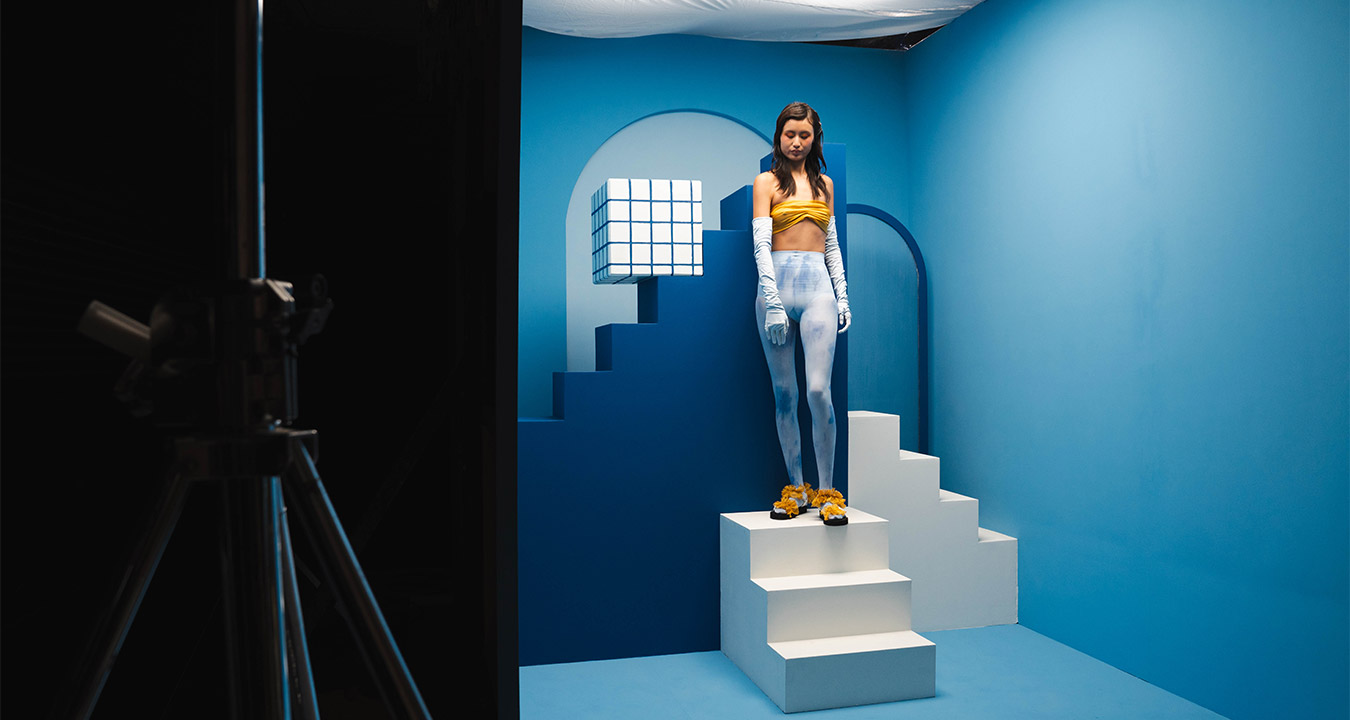
The Master’s in Production Design and Art Direction trains professionals to conceive, design and create the visual world of a film, series or advert, combining creativity, storytelling and management. It starts from a simple idea: when faced with a script, the first question is not what the space should look like, but what the story needs. A colour, a light or an object is not right in the abstract; it is right because of what it does within a particular story.
The programme combines a strong theoretical foundation with a practical, project-based learning approach. Over the course, you work through every stage of the profession, from idea to shoot. You begin with the visual tools (space, colour, light, set dressing and objects) and learn how to represent and build them: set design, set dressing, props, temporary construction and graphic representation, with an introduction to costume and cinematography. You then learn to interpret a script and transform it into a visual concept that is coherent with the story. And finally, you work like a real art department, coordinating teams, resources, budgets and schedules.
Creative people interested in visual design for film and audiovisual media who want to specialise in conceiving, coordinating and carrying out projects in art direction, set design, set dressing and the creation of narrative worlds.
Read a story, translate it into visual decisions and use them to build a world that could belong only to that film. Then bring it to life within an art department until it stands on its own in front of the camera.
Analyse a script at its different levels (plot, character, context and subtext) to identify what the space needs.
Identify which aspect of the text should shape the design and apply it at every scale: the film, the set and the object.
Recognise the visual conventions of each genre and decide whether to affirm, reject or omit them.
Develop an original design proposal based on a brief or a given set of premises.
Research periods, styles and contexts to create believable or deliberately stylised worlds.
Control space, scale, colour, light and materials, and understand the effect each has on the image.
Treat surfaces and choose furniture and objects according to their period, style and prominence in the frame.
Prepare technical documentation for a space: plans, digital modelling, a scale model and construction drawings using LayOut.
Understand the materials and techniques used in temporary construction, painting and ageing surfaces.
Anticipate how materials will behave under light and on camera, in coordination with cinematography.
Break down a script according to the needs of the art department.
Prepare and manage an art department’s budget and schedule.
Assess a project’s feasibility in terms of budget, construction and schedule.
Identify and resolve unexpected issues during construction and filming.
Manage suppliers, purchasing, rentals and logistics.
Communicate a visual proposal using precise references, mood boards and presentation documents.
Defend design decisions before the director, production or a panel.
Coordinate with direction, production, cinematography, locations and costume.
Lead an art team and negotiate creative and operational solutions with production.
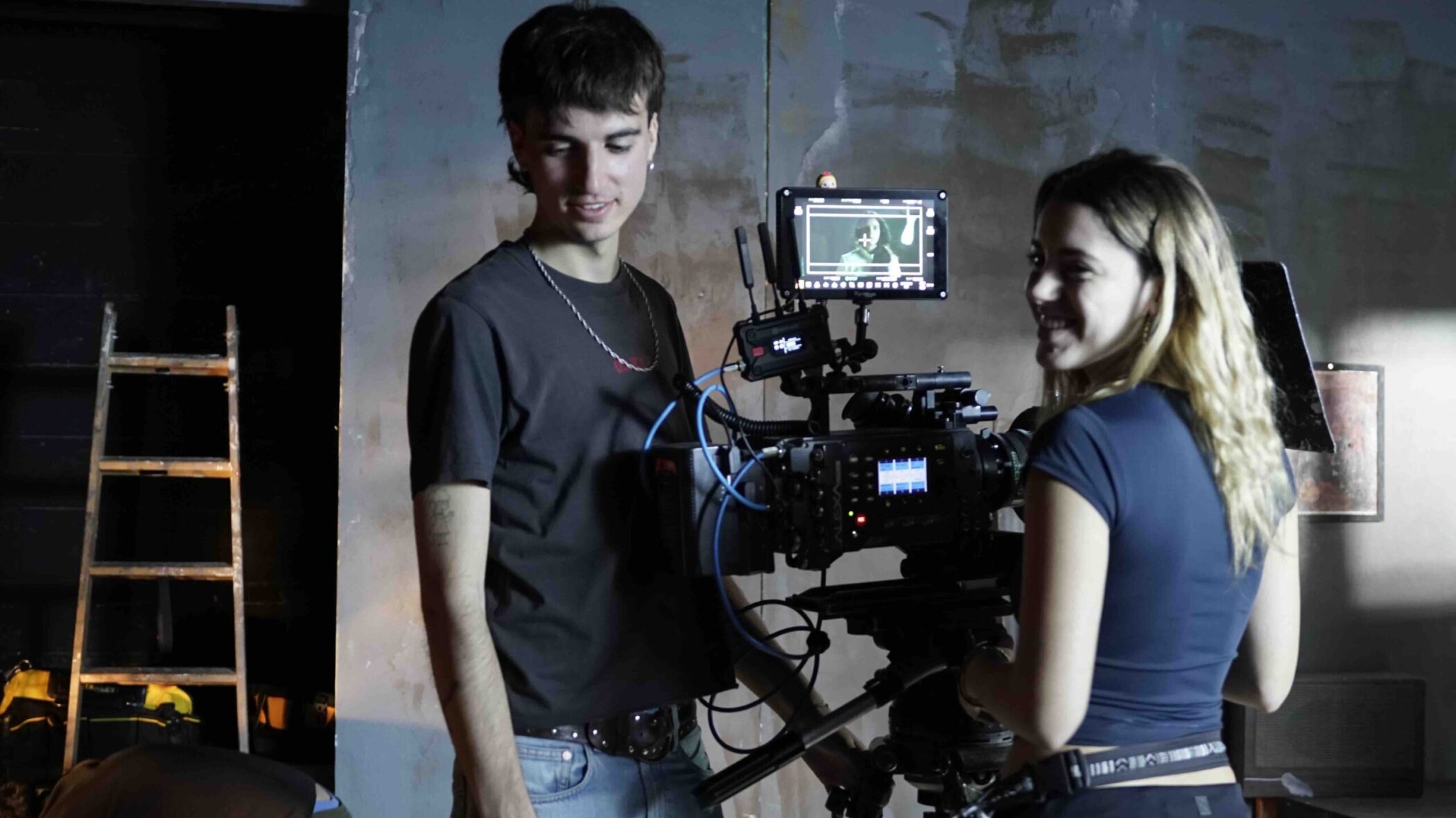
Work alongside the master’s programmes in Directing and Cinematography on real shoots.
Maintain an independent perspective and interpretation, while remaining open to different readings.
Make design decisions within constraints you cannot choose: budget, schedule and team.
Independently develop a complete production design project.
Practise self-criticism by testing your own decisions in models and on set.
Manage time, priorities and pressure, and adapt to different formats and teams.
The master’s prepares students to work in the art department of film, television series and advertising productions. Understanding every role in the department, from the shooting crew to its leadership, makes it possible to join a professional team and grow within it.
Our graduates build their careers in many areas of the entertainment and communications sector:
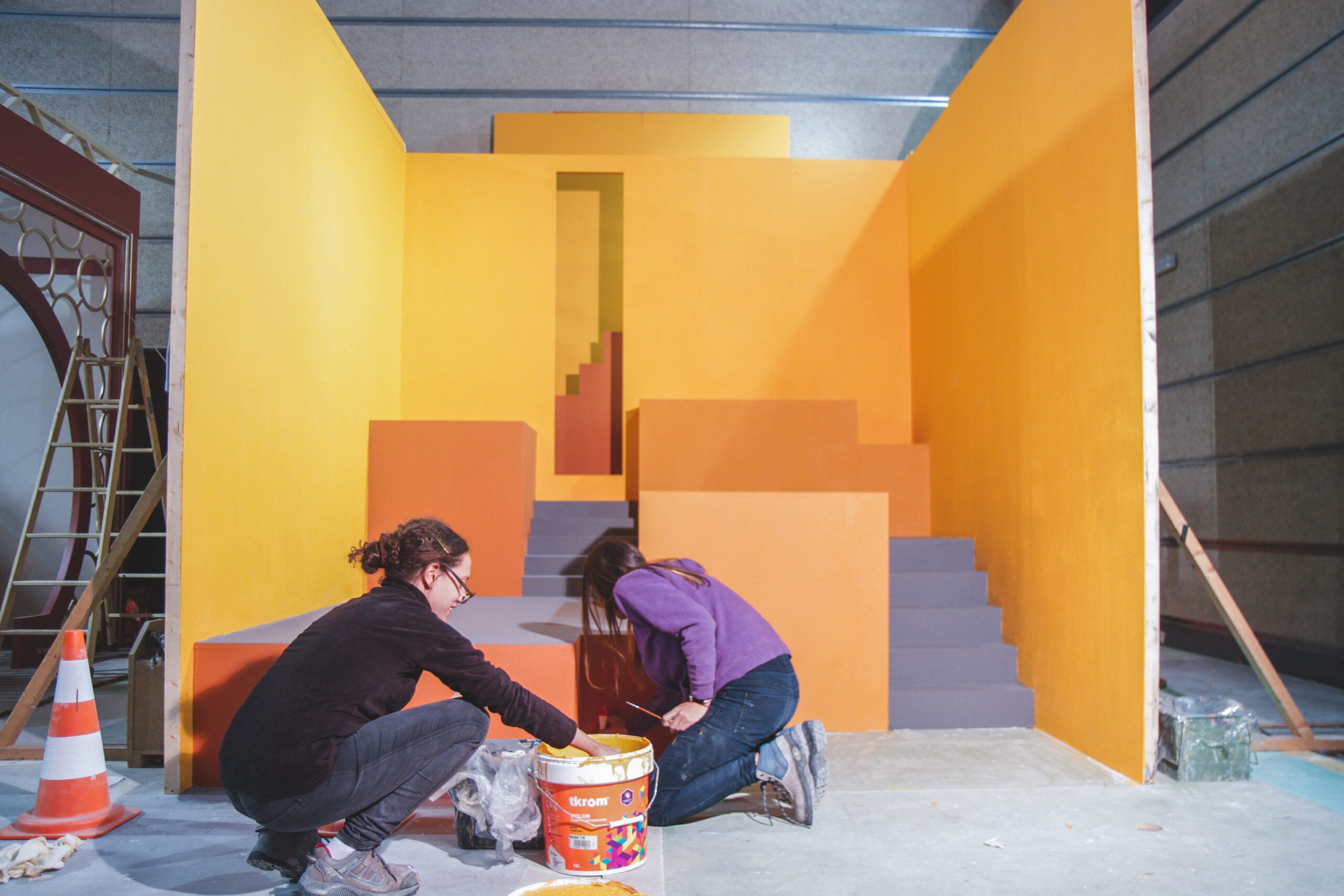
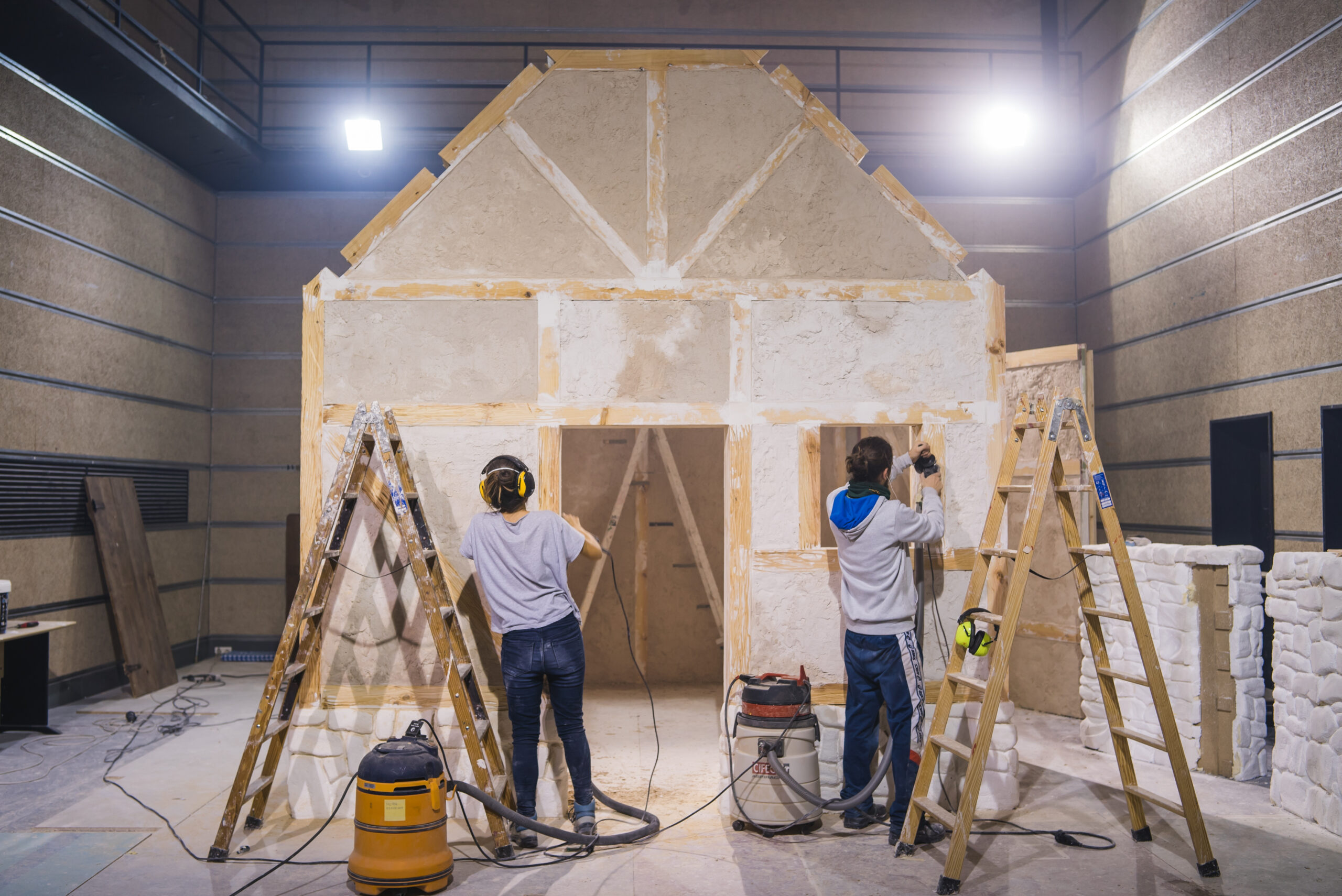
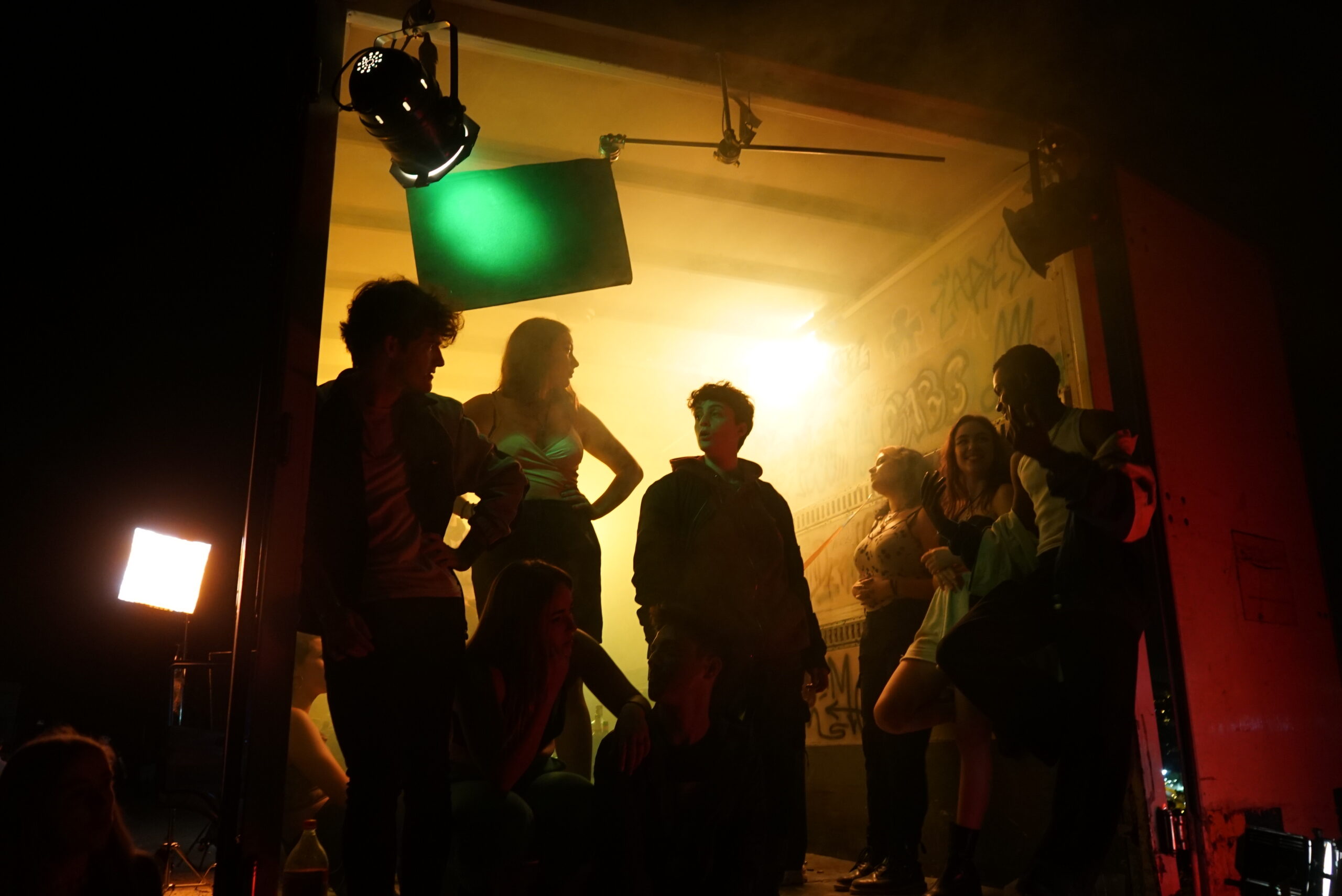
Practical learning is integrated into the classes, workshops and projects developed throughout the master’s programme.
The visual tools of art direction (space, colour, light, materials, furniture and objects) are studied in terms of the effects each can create. Students work with them hands-on, through models and on set, before putting them at the service of a story.
Floor plans, digital modelling, models and technical construction drawings using LayOut: the tools for imagining and communicating a space before building it. An art direction project only exists when others can understand it.
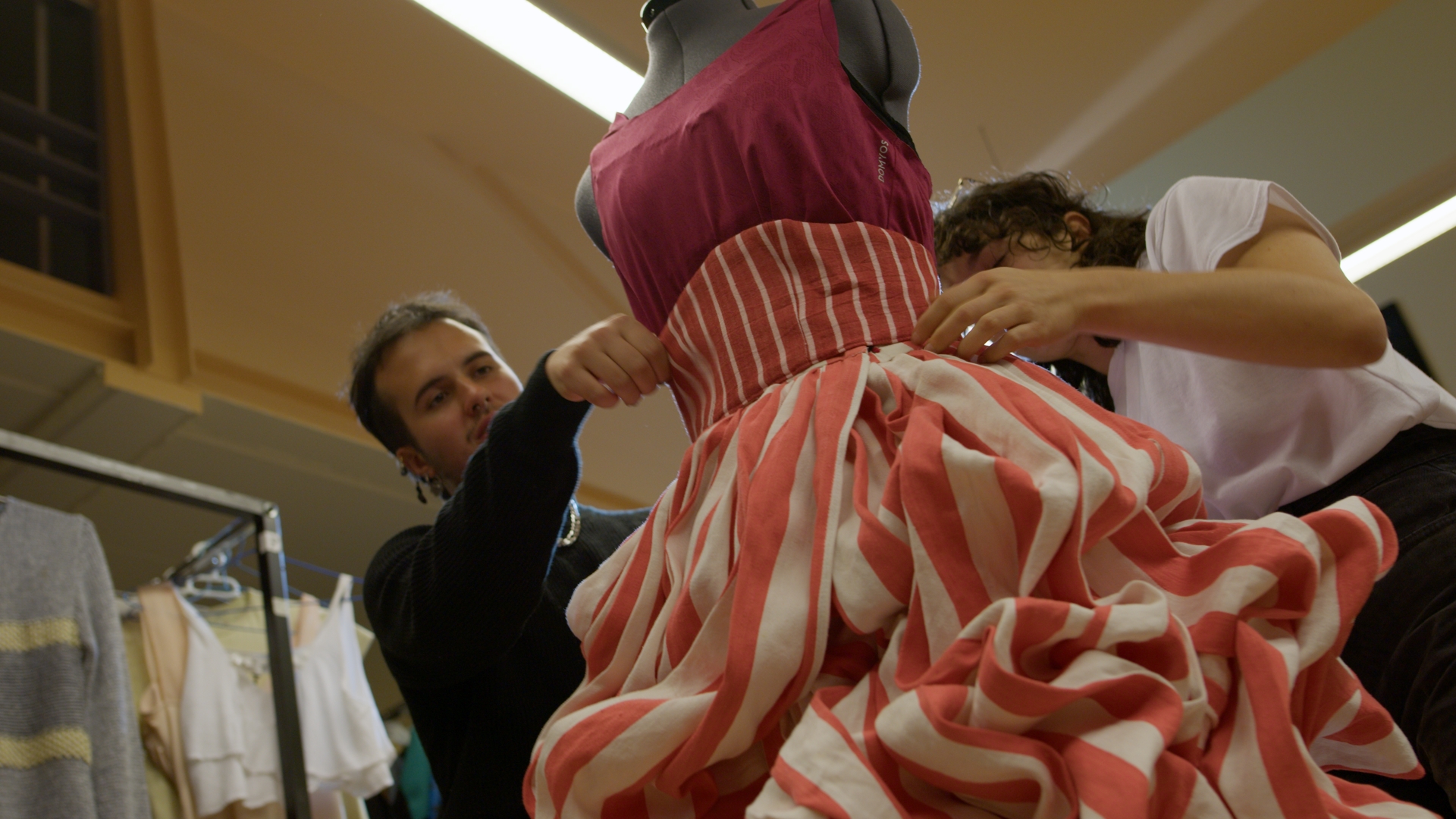
Materials, techniques and processes for temporary construction: painting, surface treatment, patinas and ageing. Students work in the school workshop at full scale on sets designed by the students themselves.
Reading the script: what a story needs from its space. Character, context, subtext and genre become concrete design decisions at the scale of a film, a set and an object.
How an art department works from the inside: roles, breakdowns, budgets, schedules, documentation and coordination with the rest of the production. The sessions are taught by working professionals using real-life cases.
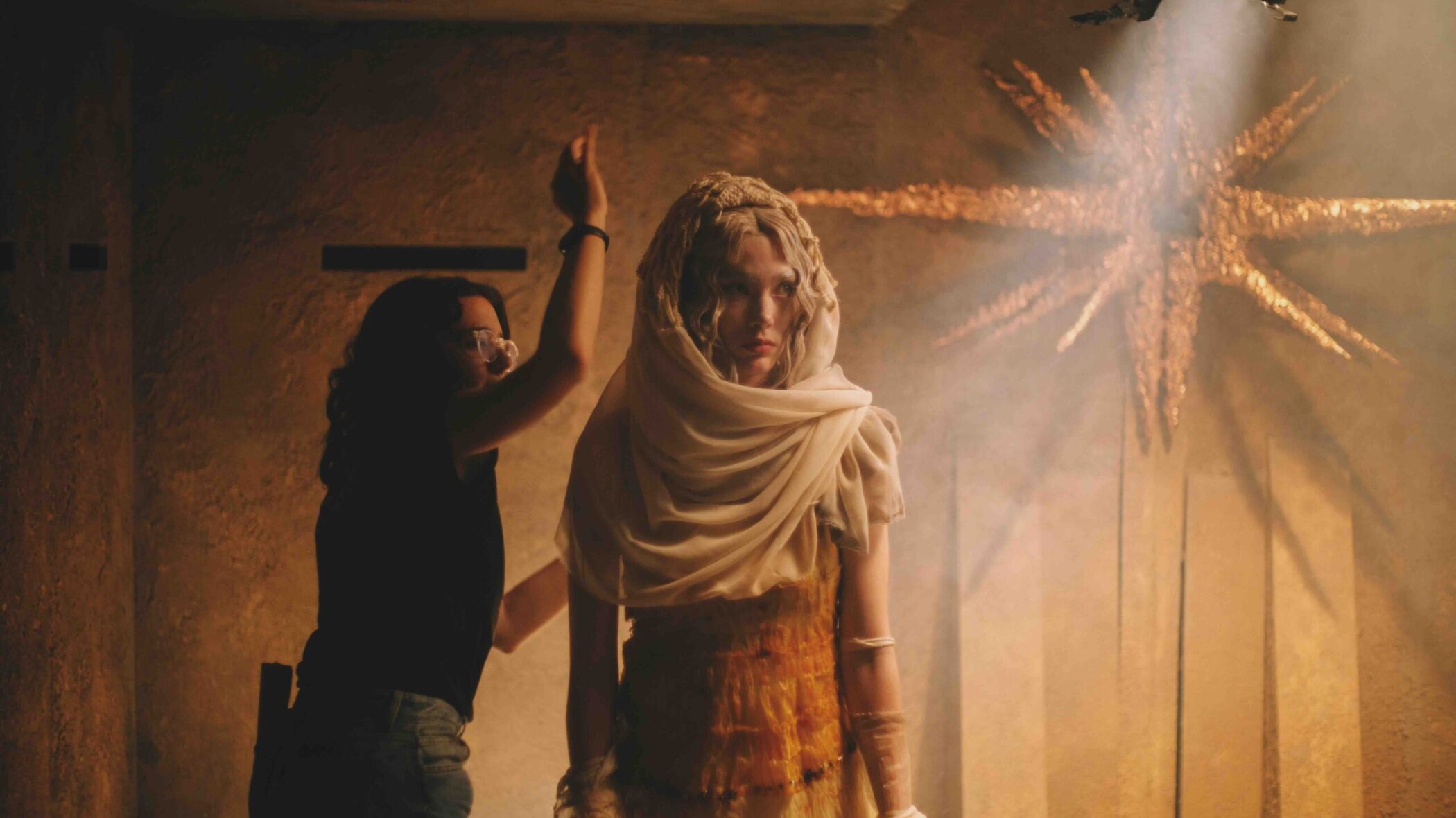
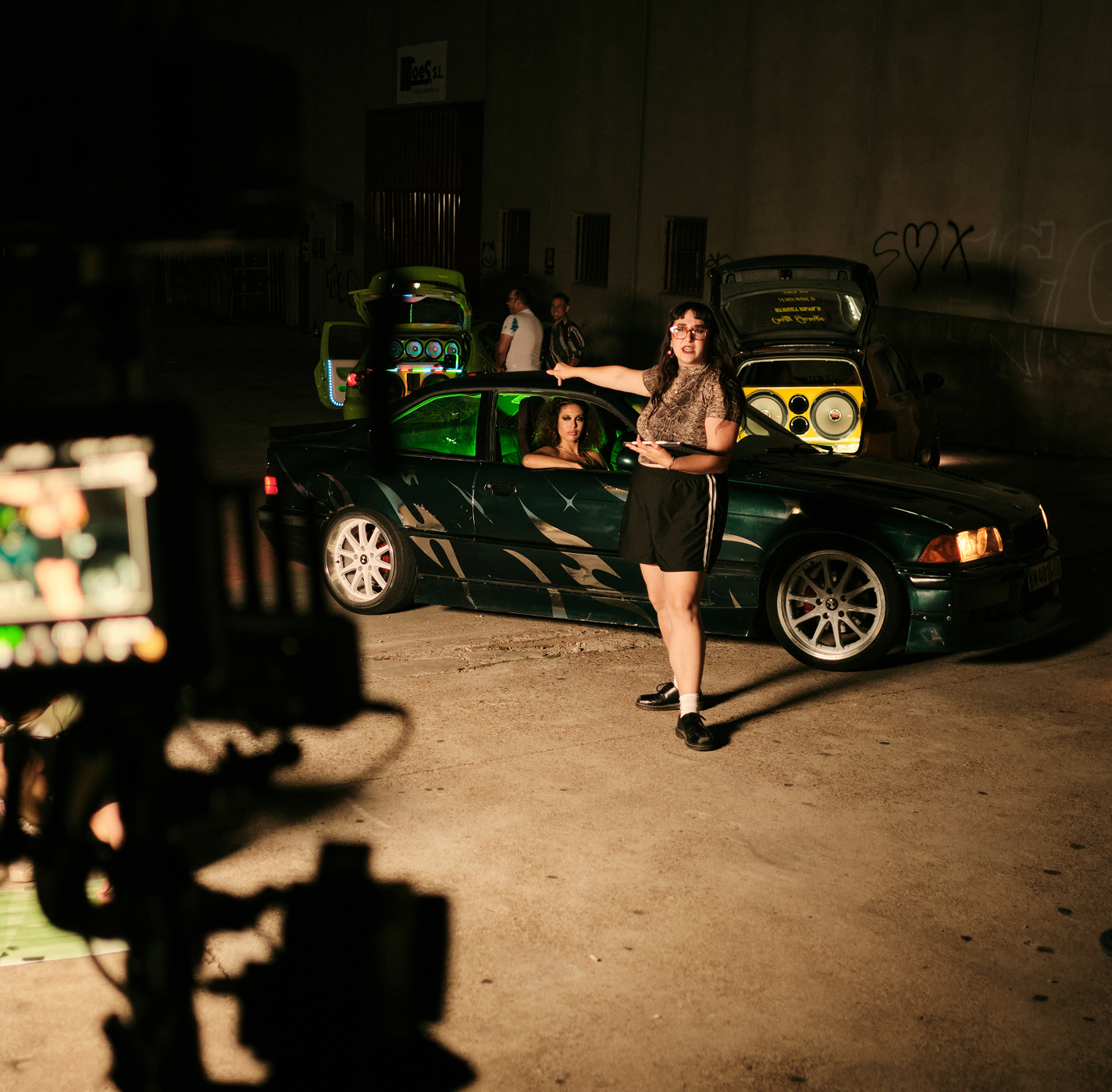
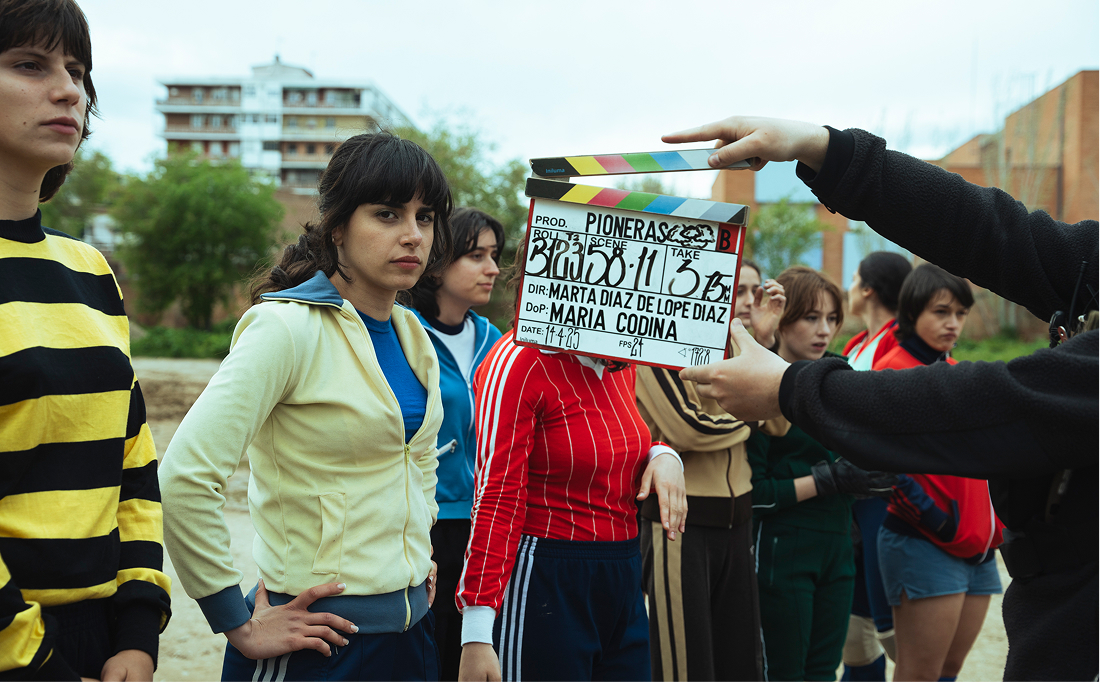
Complete projects on set, from design to filming, under professional conditions. It starts with Plató 111, the first space-design project alongside the Directing and Cinematography master’s programmes, includes Ágora and culminates in the Plató Final.
Working professionals from film, television series and advertising join the programme wherever the content calls for them, to share projects, processes and the current reality of the industry.
ÁGORA is an annual, cross-disciplinary course run by ESCAC’s Master’s Department, held from September to June and conceived as a shared space for filmmaking. It brings together learning from the different programmes through a collective creative experience: developing, pre-producing, shooting, finishing and exhibiting a short film.
ÁGORA is the practical backbone of master’s-level training: a space where specialities meet, industry dynamics are put into practice and teams are formed that can endure beyond the school. The finished film is the visible outcome of a learning process that includes creativity, organisation, collaboration and collective responsibility.
The Master’s Final Project is a professional production design project that students develop individually based on a set brief. It brings together everything they have learned: interpreting the text, developing the concept and visual language, preparing technical documentation, and planning feasibility in terms of budget, construction and schedule.
It is developed through progress and feedback tutorials, and presented in a professional dossier and a pitch to a panel. Selected projects are built and filmed on the Final Set, the last project of the course.
Complete design of the space for a work based on a set brief: concept, visual language, technical documentation, budget and schedule. It is submitted as a professional dossier and defended in a pitch before the panel.

Authorship pending (REVISAR)

Authorship pending (REVIEW)
Authorship pending (REVISAR)

Authorship pending (REVIEW)
The master’s programme is based on learning by doing. Each class begins with a solid theoretical foundation that is put to the test through hands-on work: with 1:12 scale models, in the workshop and on set. Many sessions work like a game, with clear rules, materials to handle and room to make mistakes; reflection follows, focusing on the work completed. Projects are designed, built and filmed in ESCAC’s 8 sound stages and 350 m² of workshops, alongside the master’s programmes in Directing and Cinematography.
Working professionals teach the methodology modules and contribute to the programme through masterclasses and workshops.
There are no compulsory work placements: practical work is integrated into the course projects.
Sessions in the foundations, techniques, storytelling and methodology modules. Theory is put into practice in the classroom through exercises, models and case studies.
Work in the school workshop with real materials and at full scale: ephemeral construction, painting, patinas and ageing.
Full projects, from design through to filming, alongside the master’s programmes in Directing and Cinematography. Each project is governed by its own syllabus.
Sessions with working professionals from film, television series and advertising, linked to the module or project being worked on at the time.
Individual guidance and feedback on the Master’s Final Project, from interpreting the brief through to the defence.
Assessment is continuous, and the criteria for each module are communicated at the start. Assessment takes into account the work process, how exercises are completed, and a synthesis exercise applying all the tools from the module. Projects are assessed according to their syllabus: process and teamwork, proposal and execution. Attendance at a minimum of 80 % of sessions is required to be assessed. The Master’s Final Project is graded by the tutor and a panel.
Institution-specific Master’s in Production Design and Art Direction
Joan Sabaté
09/09/2027
Mon–Fri, 10 h–14 h and 15 h–19 h
60 ECTS
14.175€
ESCAC Terrassa Campus
24
Cristina Buxó
22/06/2028
Spanish
In person
€12.758 before 09/04/2027
Graduates and degree-holders in Audiovisual Communication, Film, Scenography, Design, Fine Arts, Art History or Architecture. Students from film schools or artistic disciplines. Holders of a Higher Vocational Training qualification in Directing Audiovisual Projects and Shows, or equivalent. Professionals in the audiovisual sector who wish to specialise in the art department or change disciplines.
To be admitted to the master’s programme, applicants must submit a video pitch of no more than 3 minutes and a CV. Applicants may also optionally attach a portfolio of completed projects. If the academic director considers it necessary to assess the application, an online interview will be conducted as part of the admissions process.
Pre-enrolment schedule for the 26–27 academic year: from 2 November 2026
Applicants must complete the pre-enrolment form available on this webpage.
Applicants must provide links to their portfolio, a video pitch (maximum 3 minutes) and their CV.
The Admissions team and academic coordination will review the submitted documents and assess the application.
If deemed necessary, the programme director may conduct an online interview with the applicant as part of the selection process.
Once admission has been confirmed, applicants may reserve their place and then complete their registration, following the instructions provided by ESCAC.