Overview
Master editing as a cinematic language and turn images, sound and rhythm into tools for contemporary narrative creation.
The University Master’s Degree in Film Editing offers advanced training designed to foster an understanding of editing as one of the fundamental disciplines of contemporary audiovisual language. The programme combines technical training, critical reflection and professional practice to train specialists capable of meeting the creative, technological and narrative challenges of today’s audiovisual industry.
Throughout the master’s programme, students study the history and theory of editing, explore audiovisual narrative in depth and gain a command of the main post-production workflows. The training covers everything from organising shooting materials and narrative editing to colour correction, sound treatment and the comprehensive supervision of audiovisual projects.
The programme encourages artistic experimentation, academic research and the development of an individual creative voice, understanding editing as a tool capable of transforming perception, generating meaning and constructing complex audiovisual discourses. Work placements and the Master’s Final Project allow students to apply their knowledge in real professional settings and develop a contemporary perspective on film editing.
In addition, the master’s programme takes a critical stance and engages with the cultural, social and technological challenges facing the audiovisual industry, promoting values of sustainability, inclusion and professional responsibility.
Intended Audience
This master’s programme is for people interested in film editing as a fundamental tool for narrative creation and the construction of audiovisual meaning. It is designed for those who want to explore story analysis in greater depth, develop a critical perspective on cinema and acquire the skills needed to shape a work into its final form through editing. Artistic sensitivity, the ability to interpret and enhance filmed material, narrative skills and an interest in the evolution of cinematic language are particularly valued.
Learning Outcomes
By the end of the programme, students will be able to manage complete editing and post-production processes, develop their own narrative perspective and critically apply creative, technical and research tools related to contemporary audiovisual media.
-
Creative and Narrative Skills
-
Construct audiovisual narratives using the narrative and expressive resources of editing.
Apply rhythm, tone and narrative structure to enhance the viewer’s experience.
Adapt editing techniques to different audiovisual genres and formats.
Experiment with non-linear narratives and innovative structures.
Integrate sound, colour and image as elements of dramatic construction.
-
-
Technical Skills
-
Master the professional audiovisual post-production workflow.
Manage editing, colour correction, sound and final export processes.
Use professional tools such as Adobe Premiere, DaVinci Resolve and Avid Media Composer.
Ensure visual and narrative continuity between sequences.
Organise and manage audiovisual materials using professional methodologies.
-
-
Analytical and planning skills
-
Analyse complex audiovisual narrative structures.
Understand the narrative and emotional effects of editing.
Apply audiovisual research methodologies.
Plan editing and post-production processes.
Develop habits of independent learning and continuous improvement.
-
-
Interpersonal and communication skills
-
Communicate creative decisions with reasoned arguments.
Integrate effectively into multidisciplinary teams.
Take part in professional review and feedback processes.
Present and defend audiovisual projects in academic and professional settings.
Collaborate in complex production environments.
-
-
Professional and personal development skills
-
Practise the profession with ethical responsibility and a commitment to professional ethics.
Understand the social and cultural impact of audiovisual decisions.
Manage projects subject to deadlines and professional requirements.
Develop critical insight into one’s own work.
Establish an authorial identity in the field of film editing.
-
Career opportunities
The Master’s Degree in Film Editing trains up specialists in the narrative and expressive construction of audiovisual works through advanced mastery of image and sound editing processes.
The programme prepares students to work across all stages of post-production, integrating the narrative, technical and organisational criteria characteristic of the industryof contemporary audiovisual production.
Our graduates pursue careers in many areas of the entertainment and communications sector:
- Fiction feature films.
- Documentaries and non-fiction films.
- Television series and digital platforms.
- Advertising and music videos.
- Multiplatform audiovisual content.
Editing and Narrative Construction
- Film Editor.
- Documentary Editor.
- Fiction Series Editor.
Post-production and Technical Management
- Assistant Editor.
- Post-production Supervisor.
- Post-production Workflow Coordinator.
- Audiovisual Conforming and Finishing Specialist.
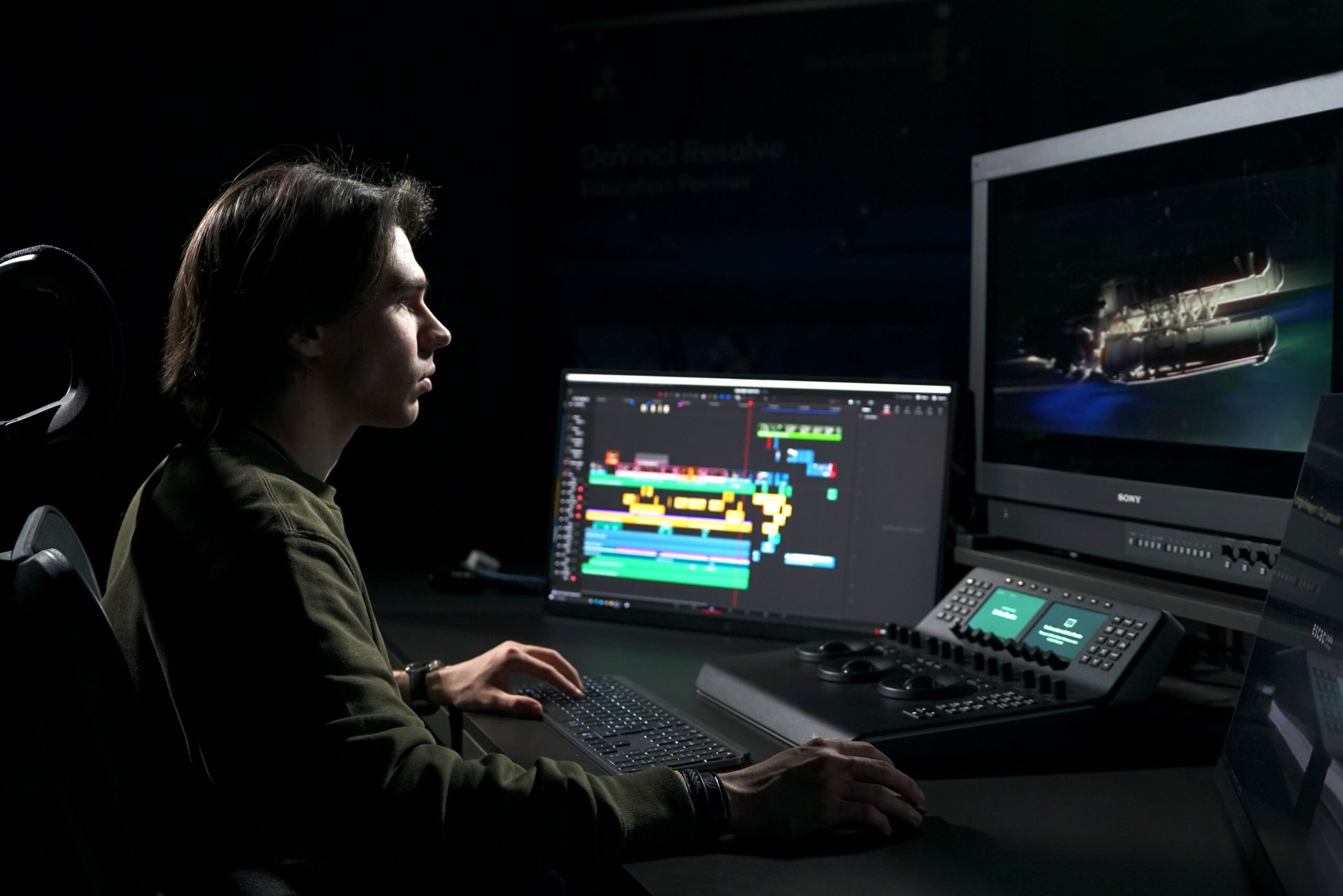
Audiovisual Editing
- Audiovisual editor.
- Image and sound editor.
- Audiovisual narrative and editing consultant.
Curriculum
-
History of Film Editing
-
Historical analysis of the evolution of film editing, from the origins of cinema to contemporary digital practices.
This course traces the evolution of film editing from the first experiments in silent cinema to contemporary forms of digital editing. Through the study of key filmmakers, schools and movements, it analyses the aesthetic, technological and narrative changes that have shaped editing practice, reflecting on how cultural and social contexts influence the construction of audiovisual narratives.
-
-
Film Editing Theory
-
Study of editing as a structural principle of audiovisual language and a generator of narrative meaning.
Explore editing as a structural and expressive principle of audiovisual language. Drawing on key theoretical models, the course addresses essential concepts such as rhythm, continuity, rupture, dramatic tension, and the relationship between image and sound. The aim is to understand editing not merely as a technique for assembling material, but as a genuine way of thinking and creating meaning.
Course syllabus
-
-
Audiovisual Narrative
-
Analysis of narrative structures, character development, and the organisation of cinematic storytelling.
Focused on the narrative principles that shape a story and on the role of editing in structuring time, space, and point of view. Through the analysis of films, series, and contemporary works, students learn to recognise and design narrative structures (classical, fragmented, and nonlinear) that enhance the clarity and emotional impact of a story.
Course syllabus
-
-
Script Analysis
-
Interpreting dramatic structures and understanding the narrative potential of audiovisual texts.
In this course, students learn to break down, interpret and assess the structural elements of a film or audiovisual script. By studying plots, characters and dramatic devices, they develop the tools to identify the mechanisms that generate tension and emotion, understanding how writing shapes the expressive potential of editing and mise-en-scène.
Course syllabus
-
-
Editing Tools and Processes
-
Learning professional editing workflows, material organisation and the technical management of post-production.
This module introduces students to the technical and organisational foundations of professional workflows in the post-production room. Using the main editing programmes, students learn to ingest, classify and synchronise filmed material, maintain well-organised structures, and carry out colour correction and final exports independently and with technical precision.
Course syllabus
-
-
Editing Workshop
-
A practical space that brings together documentary filmmaking, artificial intelligence, audiovisual creation and series editing through experimental and professional projects.
This practical module is divided into three key areas tailored to the demands of today’s industry:
- Documentary Editing and Artificial Intelligence Workshop: It explores non-fiction as a way of thinking in the digital and algorithmic age. It combines the classical foundations of organising material and the ethics of looking with the use of artificial intelligence as a tool to support analysis and the generation of editing hypotheses.
- Fiction Editing Workshop: This workshop focuses on the techniques and narrative decisions involved in editing works of fiction. Through practice with dramatic material, students develop their skills in continuity editing, ellipsis, constructing temporal and spatial expression, and shaping acting performances through the cut. Strategies for heightening dramatic tension and the story’s emotional progression are analysed, equipping students with the aesthetic and technical judgement needed to confidently edit fiction short films and feature films.
- Series Editing Workshop: An advanced exploration of the creative and technical processes involved in contemporary serial fiction. Reference cases are analysed to understand how rhythm, point of view and dramatic continuity are developed across multiple episodes, while mastering industry dynamics and coordination with directors and screenwriters.
Course syllabus
-
-
MFP
-
Course syllabus
-
-
Compulsory Industry Internship
-
Applying skills in real professional settings in the audiovisual sector.
These placements provide an opportunity to apply the knowledge acquired in a real professional setting, joining the teams of production companies and post-production studios. This experience helps students understand the hierarchies, quality standards and deadlines of the audiovisual industry, strengthening their professional skills and communication abilities.
-
Master’s Final Project (MFP)
The Master’s Final Project (MFP) marks the culmination of the student’s training in the Master’s in Film Editing and represents a synthesis of the knowledge, skills and competencies acquired throughout the programme. Through this project, the student demonstrates their ability to conceive, structure and produce an audiovisual work —or a theoretical research project—that reflects a deep understanding of editing as a narrative, expressive and conceptual language.
Projects may be submitted in two formats:
-
Audiovisual creation project
-
It consists of editing and carrying out post-production on an audiovisual work created individually or in collaboration provided the student takes primary responsibility for the editing and post-production processes, whether for fiction, documentary, audiovisual essay or experimental work. The project must demonstrate the ability to construct a coherent narrative discourse through the creative use of image, sound, rhythm and structure, applying professional editing and post-production methodologies. The project may consist of editing and post-producing a fiction, documentary, audiovisual essay or experimental work, or any other audiovisual proposal that allows the creative possibilities of editing as a tool for cinematic writing to be explored.
-
-
Research Project
-
This consists of original research into aspects related to film editing, audiovisual narration, editing theory or contemporary post-production practices. The work must pose a relevant research question, use specialised sources and develop a critical, well-founded analysis that contributes to understanding editing as an artistic and cultural discipline.
The research may focus on a range of areas, such as the history of editing, theories of film editing, analysis of editing styles in specific filmmakers or movements, the relationship between editing and narrative construction, technological developments in post-production processes, or the study of new practices related to digital editing, series, audiovisual platforms or emerging forms of storytelling.
It may also address research related to the reuse and reinterpretation of audiovisual materials, appropriation cinema, the audiovisual essay, archival practices or the role of editing in shaping cinematic and cultural discourse.
-
-
Regulations and Guidelines for Master's Final Projects
-
In both cases, the student must demonstrate mastery of the processes involved in structuring, managing and processing audiovisual material, as well as the ability to analyse, synthesise and reflect critically. The work must show a personal vision of editing as a tool for audiovisual writing and a comprehensive understanding of the technical and creative workflow.
The project will be supervised by a lecturer specialising in editing, who will guide the student in both the conceptual aspects and the technical planning of the process. For audiovisual creation projects, guidance will cover the conceptual development of the proposal as well as the editing process, narrative decision-making, technical planning and formal construction of the work. For research projects, supervision will focus especially on formulating the research problem, developing the theoretical framework, selecting and analysing sources, designing the methodology and organising the results.
The school will provide academic guidance and access to technical resources, while the student will be entirely responsible for financing the project.
The Master’s Final Project must reflect the student’s professional maturity, conceptual rigour and creative ability, as well as their capacity to work as part of a team and take on supervisory and leadership responsibilities in editing and post-production.
-
Student Projects
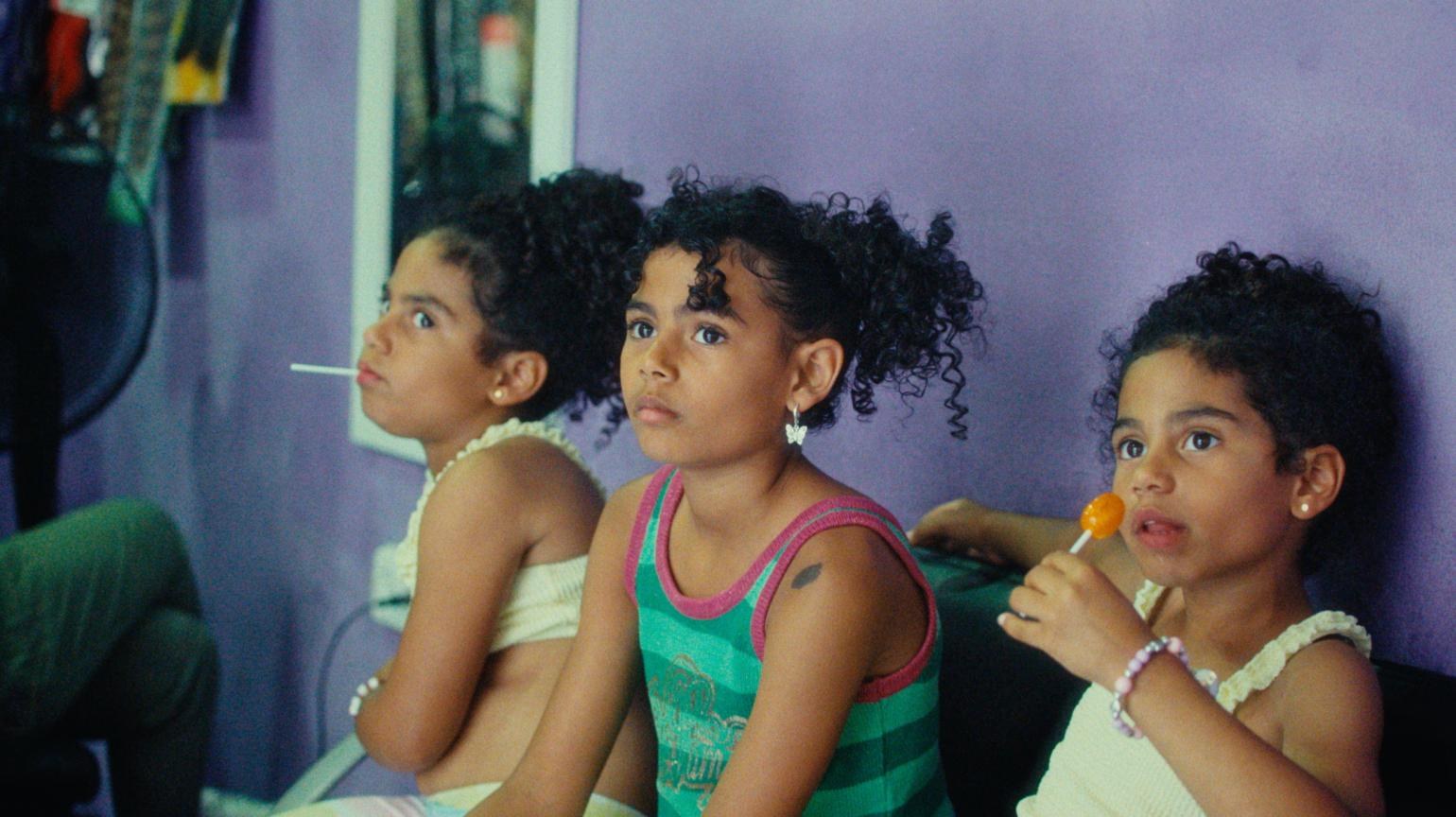
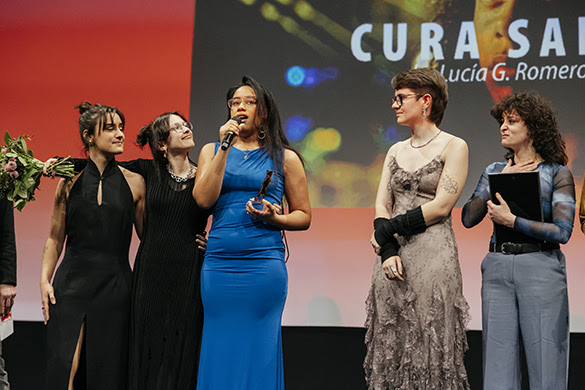
Curasana:
Authorship pending (REVISAR)
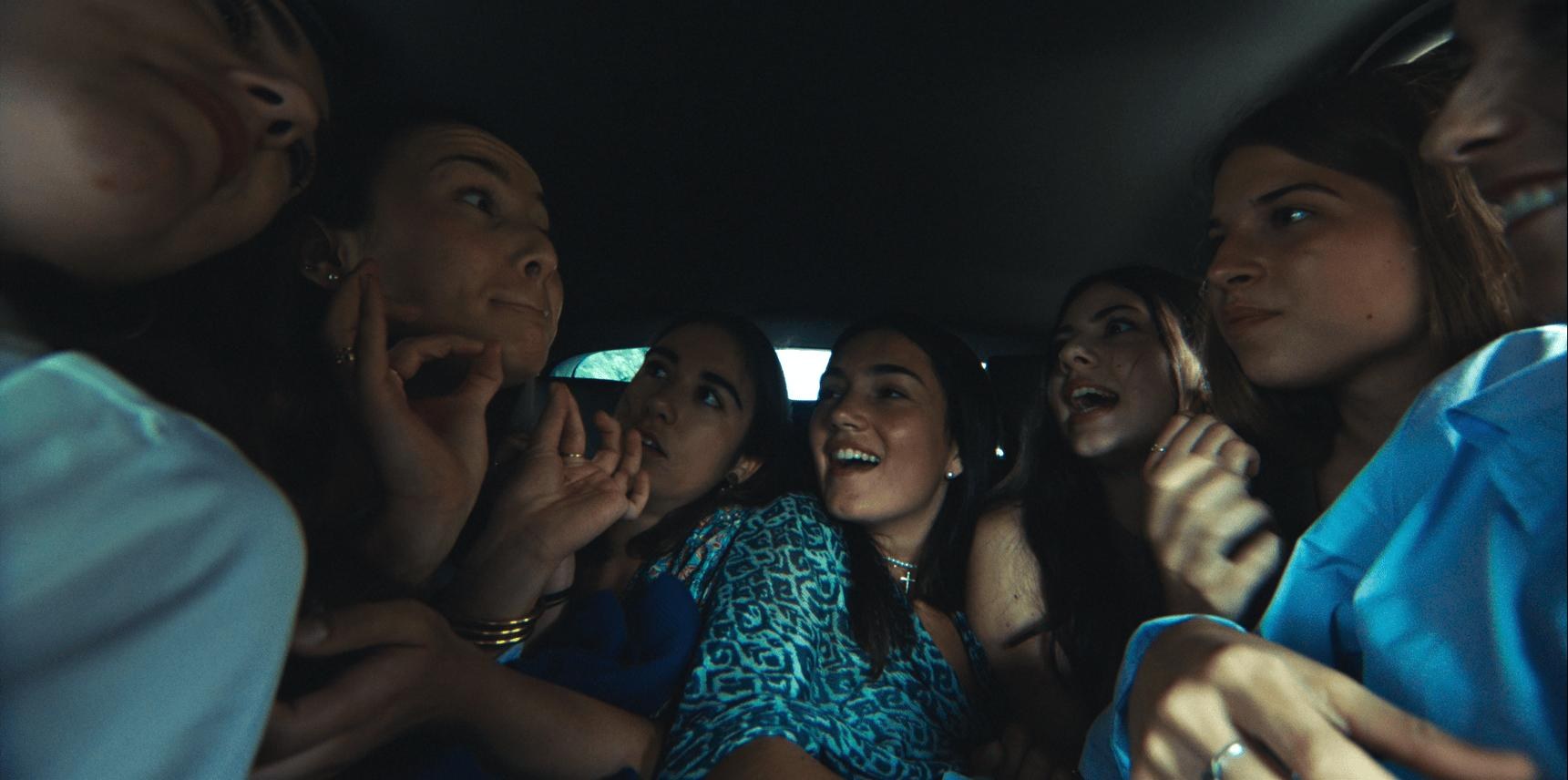
Gamberra:
Authorship pending (REVIEW)
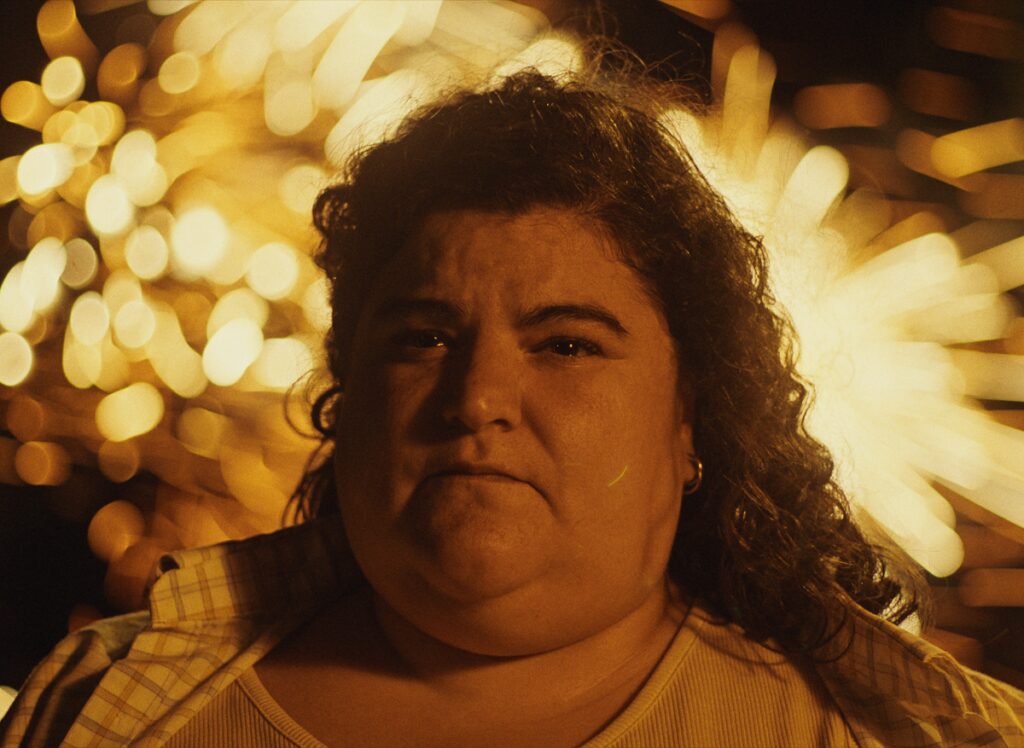
For Being a Witch and a Poisoner:
Authorship pending (REVISAR)
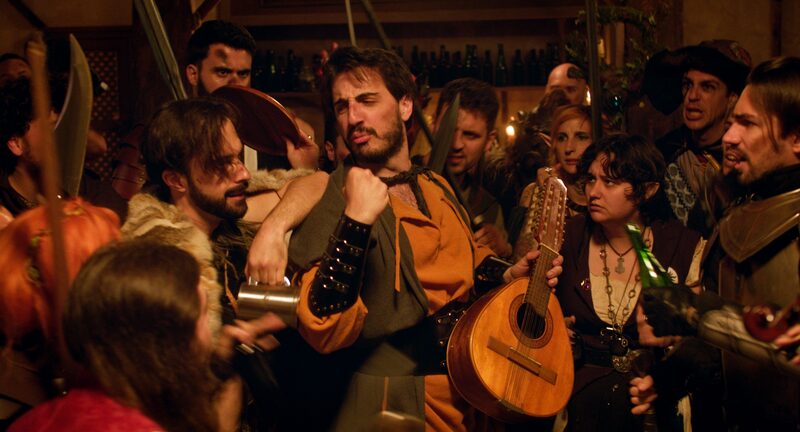
Therapies and Dungeons:
Authorship pending (REVIEW)
Methodology and Assessment
The University Master’s Degree in Film Editing combines theory, practice and critical reflection to train specialists capable of understanding editing as a language, a narrative tool and a creative process. Learning takes place through sequence analysis, ongoing practice with real audiovisual material and experimentation with different approaches to narrative construction.
Through progressive projects and editing exercises, students gain a comprehensive understanding of contemporary post-production processes, developing both technical skills and aesthetic sensitivity and critical thinking. The programme encourages students to solve complex narrative problems and develop their own creative identity.
-
Masterclasses
-
Study of the history, theory and evolution of film editing and its main aesthetic and narrative movements.
-
-
Sequence Analysis
-
Breakdown and analysis of scenes and films to understand editing decisions and their impact on the viewer’s experience.
-
-
Practical editing workshops
-
Applying editing techniques using professional software and audiovisual materials from real or simulated projects.
-
-
Project-based learning
-
Developing their own editing and post-production projects that integrate narrative, technical and aesthetic criteria.
-
-
Post-production labs
-
Focused work on organising materials, colour correction, sound integration and managing professional workflows.
-
-
Presentations and group reviews
-
Screening and analysis sessions in which students present and defend the creative decisions made during their editing processes.
-
-
Work placements
-
Professional experience at production companies, studios and post-production departments, providing insight into the real workings of the audiovisual industry.
-
-
Assessment system
-
Assessment combines practical exercises, editing projects, audiovisual analyses, written assignments, oral presentations and professional placements. Both technical skills and narrative ability, creativity in problem-solving, the management of complex processes and the conceptual soundness of editing decisions will be assessed. The programme culminates in the Master’s Final Project.
-
Teaching team
The programme brings together editors, researchers, filmmakers and specialists in audiovisual storytelling with experience in film, television, documentaries, series and new audiovisual formats.
-
Manu Yáñez (co-director of the master’s programme)
-
He holds a degree in Industrial Engineering from the Universitat Politècnica de Catalunya, a Master’s in Film Studies and a PhD in Communication from the Universitat Pompeu Fabra (UPF). As a film critic, he regularly contributes to specialist magazines such as Fotogramas, El Cultural, Kinetoscopio and Film Comment, as well as publishing in the newspaper ARA and appearing on the programme La Finestra Indiscreta on Catalunya Ràdio. He is editor-in-chief of the digital magazine Otros Cines Europa and editor of the anthology of critical essays The American Gaze: 50 Years of Film Comment (Festival de Las Palmas). He has contributed to collective monographs on filmmakers such as Terence Davies, Claire Denis, Naomi Kawase and Rainer Werner Fassbinder. In addition to heading the Film Studies department and this master’s programme at ESCAC, he has given lectures at institutions such as Goethe University Frankfurt, the CCCB and MARCO in Vigo. He is a member of ACCEC and FIPRESCI.
-
-
Jordi López (co-director of the master’s programme)
-
Born in São Paulo, Brazil, and based in Barcelona, he studied at the Escola Superior de Cinema i Audiovisuals de Catalunya (ESCAC), where he specialised in film editing.
Throughout his career, he has worked as an editor on numerous promotional pieces, trailers, advertisements and audiovisual campaigns, as well as feature films such as Eva (2011), Somos gente honrada, El guardián invisible (2017) and El internado (2021), among others. He has also worked as a supervising editor on productions such as Blu Rai (2017), Mi querida cofradía (2018) and Ovella (2021).
He combines his professional work with teaching editing and directing. He teaches on ESCAC’s higher-education programmes, master’s programmes and postgraduate courses, and takes part in international cooperation programmes that have taken him to teach workshops in cities such as Lima, Peru, and Dakar, Senegal.
-
-
Jorge Caballero
-
A telecommunications engineer and graduate in Audiovisual Communication, he holds a doctorate cum laude from Universitat Pompeu Fabra (UPF), with research focused on film and artificial intelligence. He has twice received Colombia’s National Documentary Award for his works Bagatela and Nacer.
He is co-founder of Artefacto, where he promotes projects exploring the relationships between film, artificial intelligence and new narratives, with a strong international profile. His work has been selected for and won awards at festivals including TIFF, NYFF, IFFR Rotterdam, IDFA, Hot Docs, SXSW, Doc NYC, Visions du Réel, CPH:DOX, SEMINCI, Málaga, BAFICI and Mar del Plata, among others.
His research career includes virtual reality projects developed with the United Nations around the peace process in Colombia, as well as studies on the social impact of film. He is currently a member of the selection committee for the IDFA Bertha Fund, where he advises international productions. In academia, he is an associate professor at UPF and Universitat Autònoma de Barcelona (UAB), and has taught on ESCAC’s Degree in Cinematography.
-
-
Carlota Frisón
-
A graduate in History from Universitat Autònoma de Barcelona (UAB, 2000) and a PhD in Performing Arts from the same university (2016), she pursues research and creative work in audiovisual narratives, memory and contemporary artistic practices.
She is part of the Narrativas de la Resistencia research group, affiliated with Centro Universitario TecnoCampus, and takes part in Històries del Punt projects. After completing an artistic residency at Fabra i Coats: Fàbrica de Creació, she is leading the creation of a videodance work about women workers at the Punt de Mataró and is developing an audiovisual archive project.
Together with Josep M. Català, she created the YouTube channel EspacioEnsayo, where she has presented various works exploring the relationship between film and sound. Her documentary project 1500 gramos was selected to take part in the AccióCurts programme by Dones Visuals and is in post-production. In parallel, she researches the presence and functions of voice-over in film.
-
-
Joan Marimón
-
Born in El Prat de Llobregat (Barcelona) in 1960, he holds a degree in Art History and has extensive experience in screenwriting and audiovisual storytelling. He furthered his screenwriting studies with Frank Daniel in Barcelona, took part in the Hollywood Media Interchange programme in Los Angeles and studied at the Escuela Internacional de Cine y Televisión (EICTV) in San Antonio de los Baños, Cuba.
In 1992, he chaired the Catalonia Screenwriters’ Section and later served on various boards of Guionistes Associats de Catalunya (GAC). Together with Jesús Ramos, he published Diccionario del guion audiovisual (Editorial Océano, 2003), a work focused on analysing plots, characters and narrative structures.
In 2014, he published El montaje cinematográfico. Del guion a la pantalla, published by Publicacions i Edicions de la Universitat de Barcelona and ESCAC, furthering his contribution to the study of narrative construction and cinematic language.
-
-
Ariadna Ribas
-
A 2007 graduate of the Escola Superior de Cinema i Audiovisuals de Catalunya (ESCAC), specialising in editing, she works as an editor on fiction, documentary and experimental audiovisual projects.
Since 2012, she has been part of filmmaker Albert Serra’s editing and post-production team, working with him on films such as La mort de Lluís XIV (2016), Liberté(2019) and Pacifiction (2022). In 2017, she edited Júlia ist, Elena Martín’s debut feature, for which she was nominated for Best Editing at the Gaudí Awards.
In academia, she teaches on the UPF-BSM postgraduate programme in editing and has taken part in ESCAC undergraduate and master’s training programmes, particularly in editing and documentary filmmaking.
Since 2008, she has been part of the Dostopos collective with Anna Pfaff. They develop their own projects through experimentation with editing and techniques such as found footage and animated collage. Their work has been presented at institutions and festivals including the Centre de Cultura Contemporània de Barcelona (CCCB), L’Alternativa and the Málaga Film Festival.
-
-
Felipe Bravo
-
A film editor specialising in audiovisual editing and special effects, he works professionally and teaches in the field of post-production. His work is connected to the processes of narrative construction through editing, as well as the integration of technical and visual resources into film productions.
He has worked as an editor on film productions, including With the Wind (2018), directed by Meritxell Colell Aparicio, according to available production records. His professional experience is complemented by teaching film editing at the Barcelona Film School (ECIB), where he contributes to students’ practical training.
His teaching focuses on developing skills related to editing, rhythm, continuity and post-production processes, as well as understanding editing as a creative and narrative tool.
-
-
Jaume Macià
-
He holds a PhD in Education for his research on structural models for short film scriptwriting and a degree in Catalan Philology from the University of Barcelona (UB). He has an extensive academic career connected to screenwriting and audiovisual education.
Since the 1994-1995 academic year, he has taught various courses in the Screenwriting Department at the School of Cinema and Audiovisuals of Catalonia (ESCAC), where he serves as head of studies.
His work combines educational research with the teaching of audiovisual writing, with particular attention to narrative structures and the processes involved in constructing screenplays. His career places him at the intersection of teaching practice, research into screenwriting and academic coordination.
-
-
Guillermo Lorenzana
-
An audiovisual editor and assistant editor, he works professionally in film fiction and television. His work spans different stages of the editing process, from assisting with editing to narrative construction and the development of audiovisual continuity.
He has worked on film post-production projects, both in additional editing and as an assistant editor. Among the documented projects he has worked on is Apocalypse Z: The Beginning of the End, directed by Carles Torrens, as well as other productions involving professional editing and post-production teams.
He combines his work in the audiovisual industry with specialist teaching in film editing at the Barcelona Film School (ECIB), where he contributes to students’ practical training in editing and narrative construction.
-
-
Jordi Arañó
-
An audiovisual post-production professional specialising in colour correction and digital colour grading. His work focuses on the treatment of the film image and the technical and creative processes that shape a production’s visual aesthetic.
He has provided training in post-production, teaching specialist sessions on colour correction using tools such as Apple Color and DaVinci Resolve. His experience includes working with digital film material, primary and secondary colour correction, and colour-grading workflows.
His profile combines technical knowledge of post-production tools with a creative approach to image treatment and the visual finish of audiovisual projects.
-
Key information
Qualification
University Master’s Degree in Film Editing
Master’s directors
Manu Yáñez and Jordi López
End of classes
12/05/2028
Schedule
Mon–Fri, 15h to 19h
Format
In person
Price
11.550€
Location
Terrassa
Available Places
25
Master’s coordinator
Èric Gurrera
Start date
20/09/2027 supplementary training
27/09/2027 start of classes
Master’s thesis submission
22/06/2028 (First session)
2/10/2028 (Second session)
Language
Spanish
Credits
60 ECTS
Early-bird price
€10.395 before 09/04/2027