Curasana:
Authorship pending (REVISAR)
Master’s in Production
This Master’s trains future audiovisual production professionals to lead projects from planning and production management through executive production, commercialisation and exploitation.
The ESCAC Master’s in Production offers comprehensive training in managing and leading film and audiovisual projects, combining production management with executive production, financing and the commercialisation of content.
The programme is structured in two major complementary stages. From September to December, students specialise in Line Producing, covering the planning and execution of shoots: script breakdowns, preparing budgets and shooting schedules, and managing teams, locations, resources, costs and post-production processes.
From January to June, training focuses on Film Business, exploring executive production, financial structuring, Business Affairs, distribution, marketing and international sales in greater depth. Students learn to assess project viability, design financing plans and develop launch and commercial exploitation strategies for films and series.
Using a learning by doing approach, the Master’s combines professional tools, real-world case studies and applied projects, including production planning, executive structuring of a film based on a script, and designing a launch campaign for an actual release.
Taught by working professionals, it prepares students to pursue careers in production management and coordination, executive production, financing, distribution and audiovisual marketing.
It is aimed at university graduates from business fields, law, communications or audiovisual; students from film schools and arts disciplines; graduates of higher education in audiovisual directing; and industry professionals who want to specialise or change fields.
Upon completing the master’s, students will be able to analyse, plan, finance, coordinate and commercially exploit audiovisual projects, combining creative judgement, technical expertise and business acumen.
Analyse scripts and audiovisual projects to assess their creative, technical and economic viability from a production perspective.
Interpret a script’s narrative needs and turn them into production solutions tailored to the project’s resources and objectives.
Coordinate a work’s artistic, technical and logistical needs while preserving its creative identity during filming and post-production.
Assess the creative and commercial potential of films and series, identifying opportunities for positioning and audience engagement.
Integrate an artistic vision with the principles of executive production, financing and marketing to develop viable and competitive audiovisual projects.
Plan and coordinate shoots and post-production processes, managing teams, resources, locations and technical requirements.
Prepare budgets, control costs and use professional tools such as Excel and Movie Magic Scheduling to organise audiovisual productions.
Design financing plans that integrate public funding, private investment, tax incentives, pre-sales and international co-productions.
Apply the fundamentals of Business Affairs, intellectual property, rights management and contract negotiation in audiovisual projects.
Design distribution, marketing and launch plans that integrate audience analysis, international sales and commercial exploitation windows.
Analyse the creative, technical, financial and commercial viability of audiovisual projects by assessing costs, risks and market opportunities.
Design shooting schedules, timelines and budgets, optimising resources and anticipating production and post-production needs.
Plan financing and co-production structures, assessing financial scenarios, projected returns and project sustainability.
Research markets, audiences and consumer trends to define the positioning and commercial potential of films and series.
Develop distribution and launch plans that integrate release objectives, marketing strategies, media planning and budgets.
Lead and coordinate artistic, technical and executive teams, fostering effective communication throughout all stages of production.
Negotiate agreements with talent, suppliers, financiers, co-producers, distributors and other players in the audiovisual industry.
Resolve conflicts and unforeseen issues during production, managing teams and resources with adaptability and sound decision-making.
Present and defend audiovisual projects, financing plans and launch proposals to producers, investors and distributors.
Build professional relationships and strategic partnerships that support the production, financing, distribution and commercialisation of content.
Develop autonomy, leadership and professional judgement to make decisions at the various stages of audiovisual production.
Adapt to the creative, technical and financial challenges of each project, managing unforeseen issues and priorities with initiative and responsibility.
Develop a strategic understanding of the audiovisual business, recognising the relationship between production, financing, distribution and commercial exploitation.
Maintain a critical and flexible attitude towards changes in markets, audiences, financing models and exploitation windows.
Build a distinct professional identity by identifying opportunities to specialise and develop within the audiovisual industry.
Our graduates build careers across many areas of the entertainment and communications sectors:
1. Film and feature film production
2. Production of TVseries and content for platforms
3. Marketing, distribution and audiovisual exploitation



Production management develops the financial, organisational and strategic planning of an audiovisual production. It covers budget design, project viability, overall planning, resource supervision and coordination between executive production and technical teams.
Introduces the tools, processes and documents needed to plan and carry out an audiovisual production. Covers script breakdown, the work plan, resource management and coordination across the different phases of the project.
Develops the coordination and secretarial functions within the production department. Covers document management, shooting orders, call sheets, travel, communication between teams and tracking logistical needs.
Covers the preparation, monitoring and updating of an audiovisual production budget. Topics include expense control, budget variances, payment management and the documentation needed to maintain a clear financial audit trail for the project.
Introduces the legal framework for audiovisual production. Examines copyright, intellectual property, contracts, image rights, authorisations, insurance and the legal obligations associated with the development and exploitation of a work.
Explores the responsibilities of the head of production during preparation and filming. Covers hiring and coordinating teams, resource management, logistics, adherence to the work plan and resolving issues.
Develops the economic, organizational, and strategic planning of an audiovisual production. Covers budget preparation, project feasibility, overall planning, resource oversight, and coordination between executive production and technical teams.
Analysis of the role of the executive producer in the audiovisual industry, their strategic responsibilities, and their relationships with industry stakeholders. Study of business structures, corporate models, and decision-making processes that make it possible to turn a story into a business project.
Evaluation of the creative, industrial, economic, and commercial viability of audiovisual projects. Application of market analysis tools, budget sizing, and risk assessment to inform strategic decisions before financing begins.
Introduction to audiovisual financial management and the design of financing strategies. Analysis of public and private funding sources, financial instruments, and their integration into an economic structure aligned with the project’s characteristics and needs.
Study of the main public funding programmes for audiovisual projects in Spain, Europe, and Ibero-America. Analysis of grants, funds, and institutional mechanisms, their access requirements, eligibility criteria, and compatibility within a financing strategy.
Analysis of tax incentives and private financing mechanisms applied to the audiovisual sector, as well as their integration with other funding sources to boost project viability.
Design of financing plans that integrate institutional grants, tax incentives, and private investment. Assessment of the compatibility of funding sources, financial risks, and economic viability to build a Financing Plan that is robust, balanced, and tailored to each project.
Study of co-production as a strategy for financing, business development, and internationalizing audiovisual projects. Analysis of agreements between producers, collaborative structures, international treaties, and criteria for selecting partners and designing viable co-production models.
Analysis of the legal and contractual aspects of audiovisual production from a business perspective. Study of rights, contracts, agreement negotiations and legal structures that protect the interests of the parties and ensure the viability of projects.
Introduction to the international market for audiovisual content and how sales agents operate. Analysis of markets, buyers, commercial strategies and rights negotiations to design internationalisation plans and maximise the exploitation potential of a work.
Study of the models for acquiring, financing and marketing series and content internationally for OTT platforms. Analysis of programming strategies, rights negotiations and the particular features of the series market compared with traditional film distribution.
Analysis of the different ways audiovisual content is exploited internationally, including its release windows, territories and commercial rights. Study of licensing models, distribution agreements and monetisation strategies to optimise a work’s value throughout its life cycle.
Study of the operational processes following the international sale of audiovisual content. Management of technical materials, deliverables, contractual documentation and buyers’ requirements, as well as coordination of servicing and monitoring of delivery obligations.
Analysis of the business operations of domestic film distribution and the criteria for acquiring films. Study of distribution models, commercial assessment of projects, rights negotiations and exploitation strategies tailored to the Spanish market.
Application of strategic and market analysis tools to assess a film’s commercial potential. Study of the competitive landscape, benchmarking and value proposition to identify opportunities, risks and differentiating factors that can guide its domestic release.
Analysis of market data, consumption trends and the behaviour of audiovisual audiences. Application of segmentation and targeting techniques, and audience profile development to define commercial positioning strategies grounded in market intelligence.
Developing comprehensive audiovisual launch strategies based on product positioning and commercial objectives. Media planning, advertising budgets, messaging and marketing activities, incorporating indicators to evaluate and optimise results.
Developing communication and publicity strategies for film launches. Managing relations with media, the press and advocates; preparing communication materials; planning public relations activities; and preventing reputational risks.
Developing digital strategies and trade marketing activities and promotions for audiovisual launches. Planning social media, campaigns with influencers, collaboration with exhibitors and commercial partners, and evaluating results to maximise reach and audience engagement.
A study of the cinema exhibition market and the relationships between distributors and cinemas. Developing release strategies, programming, booking and festival circulation, incorporating commercial indicators to optimise a film’s exploitation and performance in cinemas.
ÁGORA is an annual, cross-disciplinary course run by ESCAC’s department for master’s programmes, taking place between September and June and conceived as a shared space for filmmaking. It brings together learning from the different programmes through a collective creative experience: developing, pre-producing, shooting, finishing and exhibiting a short film.
ÁGORA is the practical backbone of master’s-level education: a space where disciplines intersect, industry dynamics are put to the test, and teams are formed that can endure beyond the school. The completed film is the visible outcome of learning that encompasses creativity, organisation, collaboration and collective responsibility.
The MFP is an original, independent group project that integrates the training of the master’s programme through three non-linear projects: Production Management, Executive Production and Exploitation and Commercialisation. Each block responds to an independent brief and allows application of the skills of the three disciplines. The process includes one or more supervisors, who guide, advise and authorise the defence. The assessment requires a written report that brings together the three activities and a public defence. Although the work is carried out collectively, the assessment is individual and is conducted using rubrics.
The projects may be submitted in three formats:
Breakdown, shooting schedule, calendar, ICAA budget and logistical and financial planning for a feature film.
Creation of the marketing plan, financing, forecast of returns, look & feel, dossier and pitch.
Plan for the release of a real film, with market analysis, strategy, campaign, schedule, P&A, forecast of results and a defence before professionals.
The committee for the MFP assigns work, appoints panels, approves assessment rubrics and sessions, and coordinates the defence. The grade combines the assessment of the supervisors and the panel. Each component accounts for one third of the final grade and includes a written report and a pitch or oral defence.
Sessions: June and September.

Authorship pending (REVISAR)

Authorship pending (REVIEW)

Authorship pending (REVISAR)

Authorship pending (REVIEW)

The methodology is based on learning by doing: students learn by producing and applying knowledge in situations close to the industry, supported by professionals who are active in the industry.
The programme combines projects developed in a workshop format, modules in the format of specialist seminars, lectures and masterclasses. The projects bring together pre-production, production and completion of key projects; the seminars explore in depth thematic content; the workshops set specific production objectives; and the masterclasses encourage dialogue with leading professionals. The course uses professional resources, including production facilities with Movie Magic Scheduling and EP Budgeting, and connects the creative dimension, technical, legal, financial and commercial aspects of each project.
Sessions to pre-produce, produce and complete the master’s main projects.
Theoretical classes led by professionals on specific content in the form of modules with specific topics on a specific area of the business.
Practical sessions with a specific objective.
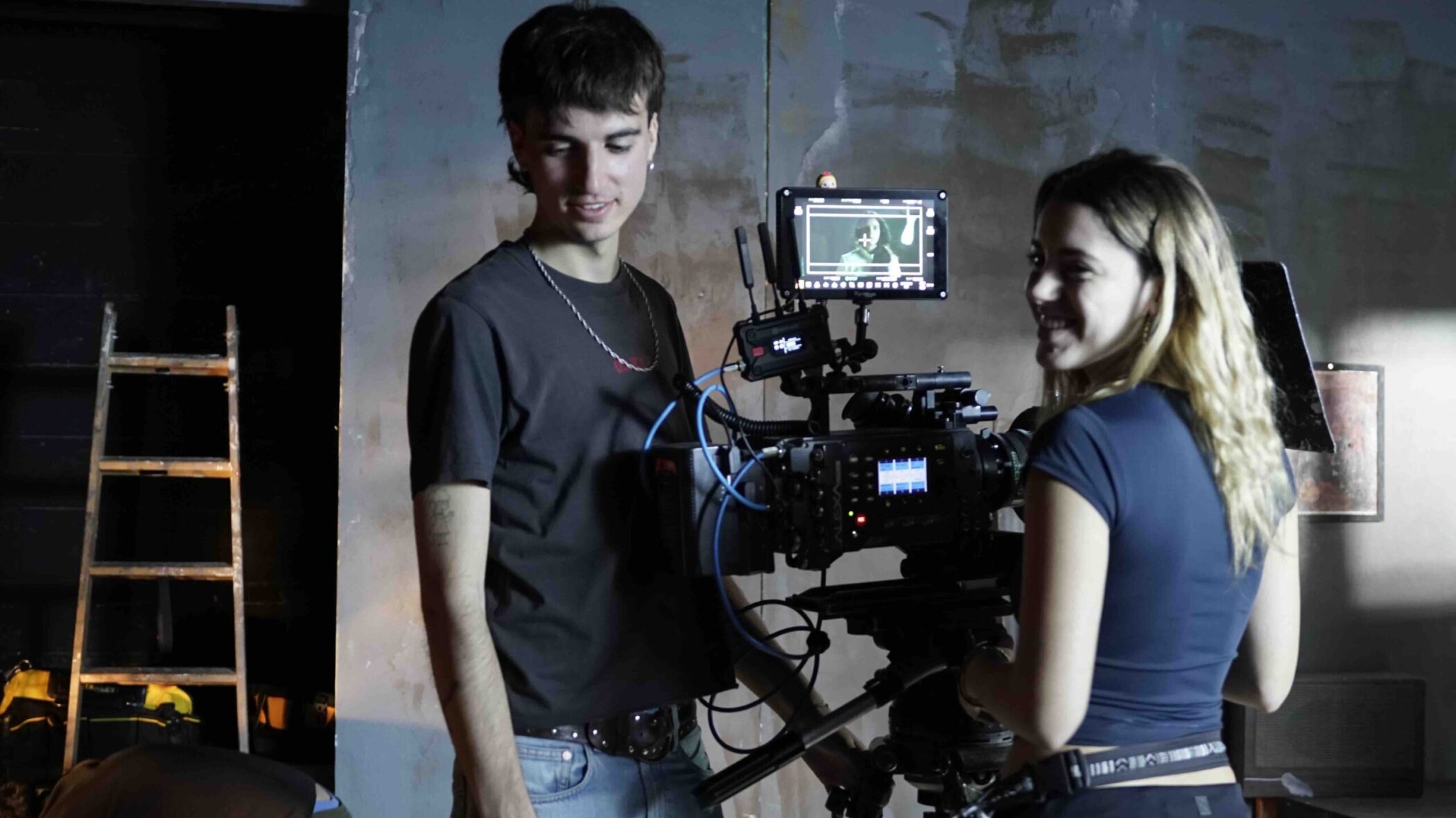
A series of practical classes with a specific production goal, in which students apply the theoretical and technical knowledge acquired in other subjects. Theoretical knowledge is put into practice using cameras or specific software in a classroom or studio.
One- or two-day sessions involving a dialogue with a renowned professional whose work relates to the objectives of the master’s programme, providing an opportunity to learn from their experience.
The assessment considers the practical application of knowledge, the quality and feasibility of the projects, planning, the budget, control of processes, team work and the defence of decisions. The TFM is assessed individually using rubrics communicated in advance, based on the assessment by the supervisors and the panel, the report for each block and the pitch or oral defence.
The teaching team brings together active professionals from the film and advertising industries and ESCAC’s own faculty. Their experience in production, financing, law, marketing, distribution and platforms connects learning with the reality of the industry.
The programme features active professionals and leading specialists in financing, distribution, marketing, international sales and audiovisual strategy, offering a practical perspective connected to the current reality of the industry.
Institution-specific Master’s Degree in Production
Aintza Serra
13/09/2027
01/07/2027 (1st session)
01/10/2027 (2nd session)
Spanish; some classes may be taught in English
60 ECTS
€12.758 before 09/04/2027
24
Cristina Buxó
22/06/2027
Sep.– Dec.: Mon–Fri 10:00-14:00, and Tuesday, 15:00-19:00
Jan.– Jun.: Mon–Fri 15:00-19:00
In person
14.175€
ESCAC Terrassa Campus
Graduates or degree holders in business administration and management of companies, advertising and public relations , law, audiovisual communications or other related qualifications related to the sector; students from film schools, artistic disciplines or higher-level programmes in audiovisual directing; and professionals with audiovisual experience.
Organisational and analytical skills and communication, negotiation, teamwork, and an interest in the industry and a willingness to combine creative judgement and business vision are valued.
Pre-registration schedule for the 26-27 academic year: from 2 November 2026
The selection is made on the basis of the video pitch and the CV. If deemed necessary , the management will conduct an online interview. Admitted applicants who need a student visa must start the process as soon as possible, since it may take between two and four months.
Video pitch of up to 3 minutes and a CV. Optional portfolio featuring professional or amateur projects.
Start date: 14/09/2026.
End of classes: 22/06/2027.
First session of the Final Project: 01/07/2027.
Second session: 01/10/2027.
Early Bird until 10/04/2026.